Best AI Humanizers (2026): An Honest, Hands-On Ranking
Tools ranked in this guide






Disclosure. I'm Huzefa Abbasi, founder of WriteHybrid, so I have an obvious stake in where my own tool lands on this list. This is an editorial ranking built from hands-on use of each tool, each vendor's public pricing as of June 2026, and the publicly visible reviews real customers leave on Trustpilot, Reddit, and Product Hunt, not a lab study, and not a scoreboard of invented "pass rates." Whether any humanizer clears the AI detector you face depends entirely on your text and the specific checker your reader runs, so treat every vendor's evasion marketing (mine included) as a claim to verify yourself.
How I picked these, and what I deliberately ignored
There is no honest single number that tells you which humanizer is "best," so I didn't fabricate one. Instead I ranked on the things you can check before you pay, and on the things existing customers complain about after the novelty wears off:
- Hands-on use. I ran the same kinds of drafts, an academic paragraph, a marketing blurb, a technical explainer, through each editor to see how the output reads.
- Pricing transparency. Clear plans, honest per-word math, and refund terms you can actually invoke matter more than a flashy headline discount.
- Free tier. A recurring quota you can keep using beats a one-time trial that's gone in a paragraph. I weighted "can you genuinely evaluate this before paying?" heavily.
- Modes and control. Whether you can set the register (academic vs. marketing vs. technical) before the rewrite, rather than nudging one generic slider after.
- Real user reputation. I read each tool's Trustpilot profile and Reddit threads, and I summarize the recurring praise and the recurring complaints below, not cherry-picked quotes.
What I ignored: affiliate payouts, "100% undetectable" slogans, and any tool's self-reported bypass percentage. The thing the affiliate listicles bury is that a clean rewrite has two jobs at once, it has to read like a person wrote it, and still say what you meant. Plenty of tools nail the first by wrecking the second, swapping precise wording for vague synonyms until the paragraph drifts. So I read outputs for meaning, not just smoothness, and I down-rank tools that get "natural" by getting wrong.
At a glance (pricing and ratings verified June 2026)
Ratings below are approximate "at the time of writing" and vary by regional Trustpilot domain; confirm pricing at checkout, since plans change often.
| Tool | Free tier | Entry paid | Reputation (Trustpilot, approx.) |
|---|---|---|---|
| WriteHybrid | 500 words/mo, recurring | $9/mo · 10k words | Newer entrant; small review base |
| Phrasly | 200 words, one-time | $12.99/mo · 25k words | ~4.4–4.7 · 2,300+ reviews |
| WriteHuman | 200 words, one-time | $12/mo Basic | ~4.0 · ~200 reviews |
| Undetectable.ai | 250 words, one-time | $14.99/mo · 10k words | ~2–3.4 · 800+ reviews |
| StealthWriter | 250 words, one-time | $19/mo · 30k words | ~2–2.8 · small sample |
| Humbot | 300 words, one-time | $9.99/mo · 50k words | ~2.4 · 80+ reviews |
| BypassGPT | 150 words, one-time | $14.99/mo · 15k words | ~3.2–3.5 · 200+ reviews |
1. WriteHybrid, best all-rounder on value
The best default for most writers: real modes, a recurring free tier, and the lowest honest entry price, with the caveat that I build it.
Best for: People who want one dependable humanizer with named writing modes and a free tier they can actually keep using.
Pros
- +Recurring 500-word monthly free tier with no card, on the same engine as paid plans
- +Four named modes: Academic, Marketing, Casual, Technical
- +Lowest honest entry price here, $9/mo for 10,000 words, with API on Starter
- +14-day refund window stated up front
Cons
- −500 free words won’t cover a long document in one pass
- −Web-only, no offline app or browser extension yet
- −Newer brand, so a thinner public review base than QuillBot or Phrasly
- −Like every tool here, it cannot promise a detector result
This is my product, so weigh the recommendation accordingly, but the reasons it tops the list are checkable facts, not scores. It exposes distinct Academic, Marketing, Casual, and Technical modes, so you set the register before humanizing instead of fighting a generic rewrite that flattens a thesis paragraph into a blog post. The free tier recurs: 500 words every month, no card, on the same engine as the paid plans, which over a year is roughly 6,000 words you can spend testing it on your own work rather than on marketing copy.
Pricing is the other honest advantage. At $9/month for 10,000 words, Starter works out to about $0.0009 per word, cheaper than most named competitors, and the 14-day refund is stated plainly rather than buried. Because WriteHybrid is younger than QuillBot or Undetectable.ai, it doesn't have a thousand-review Trustpilot trail yet, fair to flag, so don't take my word for it: use the recurring free quota to test it against the alternatives below before you commit a cent.
Pricing (verified June 2026)
- Free: 500 words/month, recurring, all modes including Academic.
- Starter: $9/month for 10,000 words, with API access.
- Pro: $19/month for 50,000 words.
- Refund: 14 days.
Who it's for
Anyone who wants a single default tool and values trying-before-paying. If you write across registers, a dissertation one week, a landing page the next, the explicit modes save the most time.
2. Phrasly, best reputation, student-budget pick
The most-loved tool of the competitors, a genuine student favorite, provided you accept its annual-billing default and weaker results on strict detectors.
Best for: Undergraduates and budget writers turning notes and drafts into readable prose, who want a tool with a long, positive review history.
Pros
- +Healthiest reputation in the category: ~4.4–4.7 stars across 2,300+ Trustpilot reviews
- +Student-priced, with an Academic mode that preserves citations reasonably well
- +Simple, fast interface that reviewers consistently praise
Cons
- −Free access is a one-time ~200 words, and reviewers say allowances burn fast
- −Recurring complaints about annual-billing surprises and refunds
- −Results are inconsistent against stricter detectors, reviewers and our reading agree
- −No API or team seats
Phrasly markets directly to students, and it shows: the output reads like plain undergraduate prose rather than agency copy, and it preserves formatted citations well in practice. Its real edge over everything else on this list is reputation, at the time of writing it holds roughly 4.4–4.7 stars across 2,300+ Trustpilot reviews, by far the largest and most positive review base of any competitor here. Recurring praise is the clean interface and quick workflow; recurring complaints cluster on the annual-billing default catching people out and on inconsistent results once a strict detector enters the picture. The Student plan is fairly priced for term-paper volume, but conclusion paragraphs sometimes get reordered, so re-read your argument's logic after a pass.
Pricing (verified June 2026)
- Trial: 200 words, one-time.
- Student: $12.99/month, 25,000 words, academic mode.
- Pro: $24.99/month, 75,000 words.
Who it's for
Students who want a well-liked, affordable tool for coursework, and who'll watch the billing toggle and still verify on their institution's checker.
3. WriteHuman, the polished editor
The nicest editing experience here, with a solid ~4-star reputation, but watch the annual-billing trap and the no-refund policy.
Best for: Solo writers who edit in place and care about a clean, side-by-side editing interface.
Pros
- +Cleanest editor in this set, with a readable side-by-side diff view
- +Roughly 4 stars across ~200 Trustpilot reviews, reviewers praise ease of use
- +Good on marketing and short-form copy
Cons
- −Stronger "Enhanced" mode is gated to Pro at $22; $12 Basic is Standard-only
- −Multiple reviewers report being charged annually when expecting monthly, plus a strict no-refund policy
- −Support response times described as slow (days)
- −Weaker on longer and academic text
WriteHuman's strength is its editor, a clean, readable interface with a side-by-side view that makes it easy to compare changes before you accept them. Its Trustpilot reputation is genuinely decent, around 4 stars across roughly 200 reviews, with happy users citing the interface and the help it gives against writer's block. The honest counterweight is a recurring complaint pattern: several reviewers describe signing up expecting a monthly plan and being charged for a year, then hitting a firm no-refund policy and slow support. The thing to watch at checkout is also mode gating, the stronger "Enhanced" mode lives on the $22 Pro tier, while the $12 Basic plan only includes Standard, even though the marketing reads as if Enhanced is everywhere. (Note the name is easy to confuse with WriteHybrid, different companies.)
Pricing (verified June 2026)
- Trial: 200 words, one-time.
- Basic: $12/month, Standard mode only.
- Pro: $22/month, unlocks Enhanced.
Who it's for
Writers who live in the editor and want the smoothest in-place editing, as long as they subscribe monthly deliberately and verify the toggle.
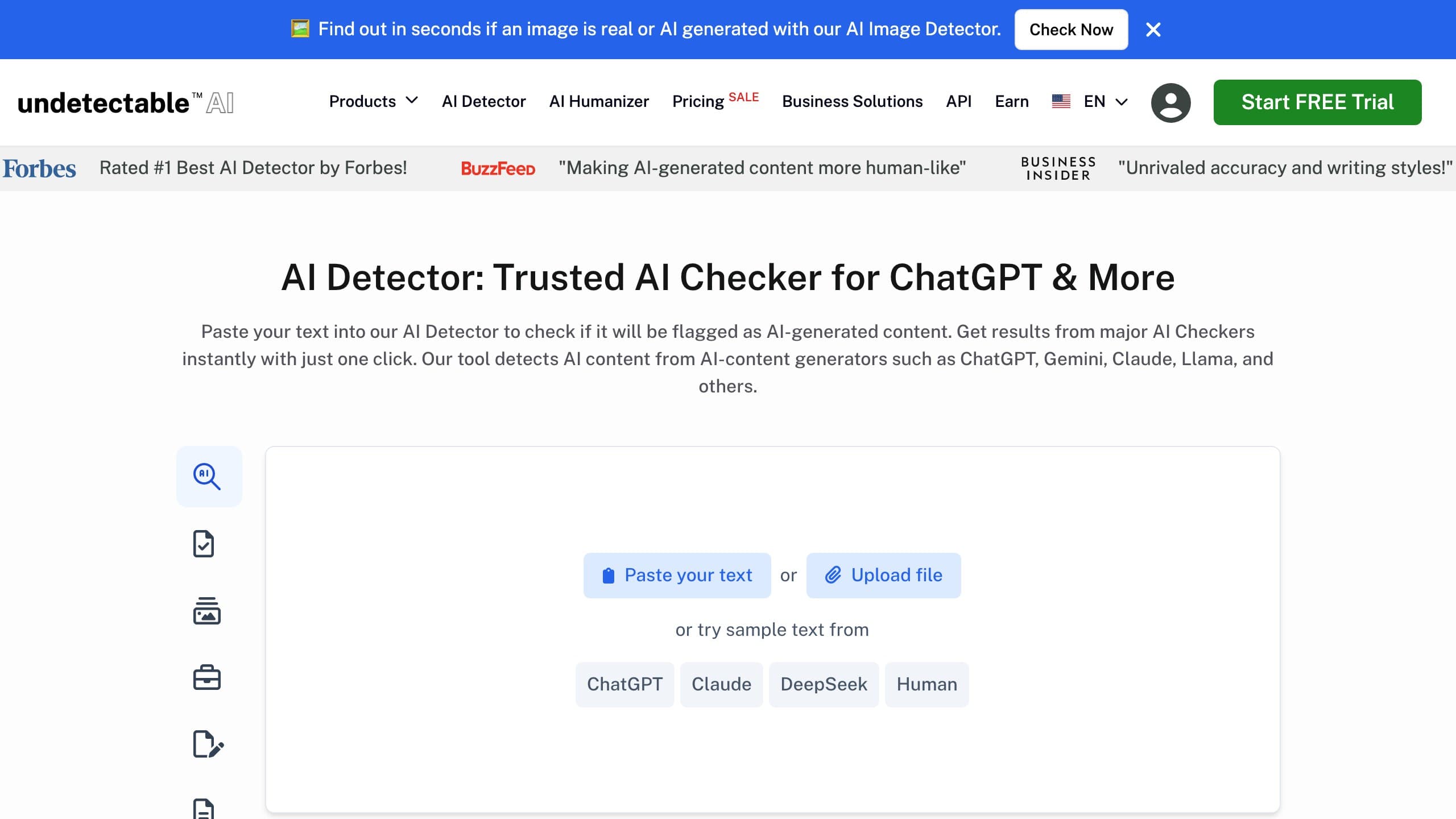
4. Undetectable.ai, the recognizable brand
The loudest brand in the category and a simple workflow, but the priciest entry here, and its billing reputation is the biggest reason to read the fine print.
Best for: Marketing teams who want a well-known name and don't mind paying a premium for it.
Pros
- +Best-known brand, with a genuinely simple paste-and-go workflow
- +Capable on marketing and casual blog copy
- +Large review base, and some reviewers report helpful support
Cons
- −Priciest entry plan among mainstream tools; strongest setting gated to Pro
- −Trustpilot ranges widely, ~3.4 on its main profile but closer to 2 on some regional pages
- −Heavy, recurring complaints about charges after a "free trial" and hard refunds
- −Marketing leans on "100% undetectable" language with no independent backing
Undetectable.ai has the loudest brand in the category and a genuinely simple workflow. The catch is value and trust: the entry plan is the priciest among mainstream tools, the strongest setting is gated to Pro, and the free allowance is a one-time 250 words. Its reputation is the most polarized here, at the time of writing the main Trustpilot profile sits around 3.4 stars across 800+ reviews, but several regional domains sit closer to 2 stars, and the dominant complaint pattern is striking: unexpected charges after what users thought was a free trial, difficulty getting refunds, and inconsistent output. Plenty of people use it happily, but read the trial and renewal terms carefully before you enter a card. In hands-on use it's perfectly capable on marketing and casual blog content; on dense, precise writing it's more prone to softening exact wording.
Pricing (verified June 2026)
- Trial: 250 words, one-time.
- Starter: $14.99/month, 10,000 words.
- Pro: $29.99/month, 50,000 words.
- Note: auto-renews; refunds are limited once you've used much of a plan. Confirm at checkout.
Who it's for
Teams that value brand recognition and a simple interface over price, and who will treat the "undetectable" branding as marketing.
5. StealthWriter, best variant workflow
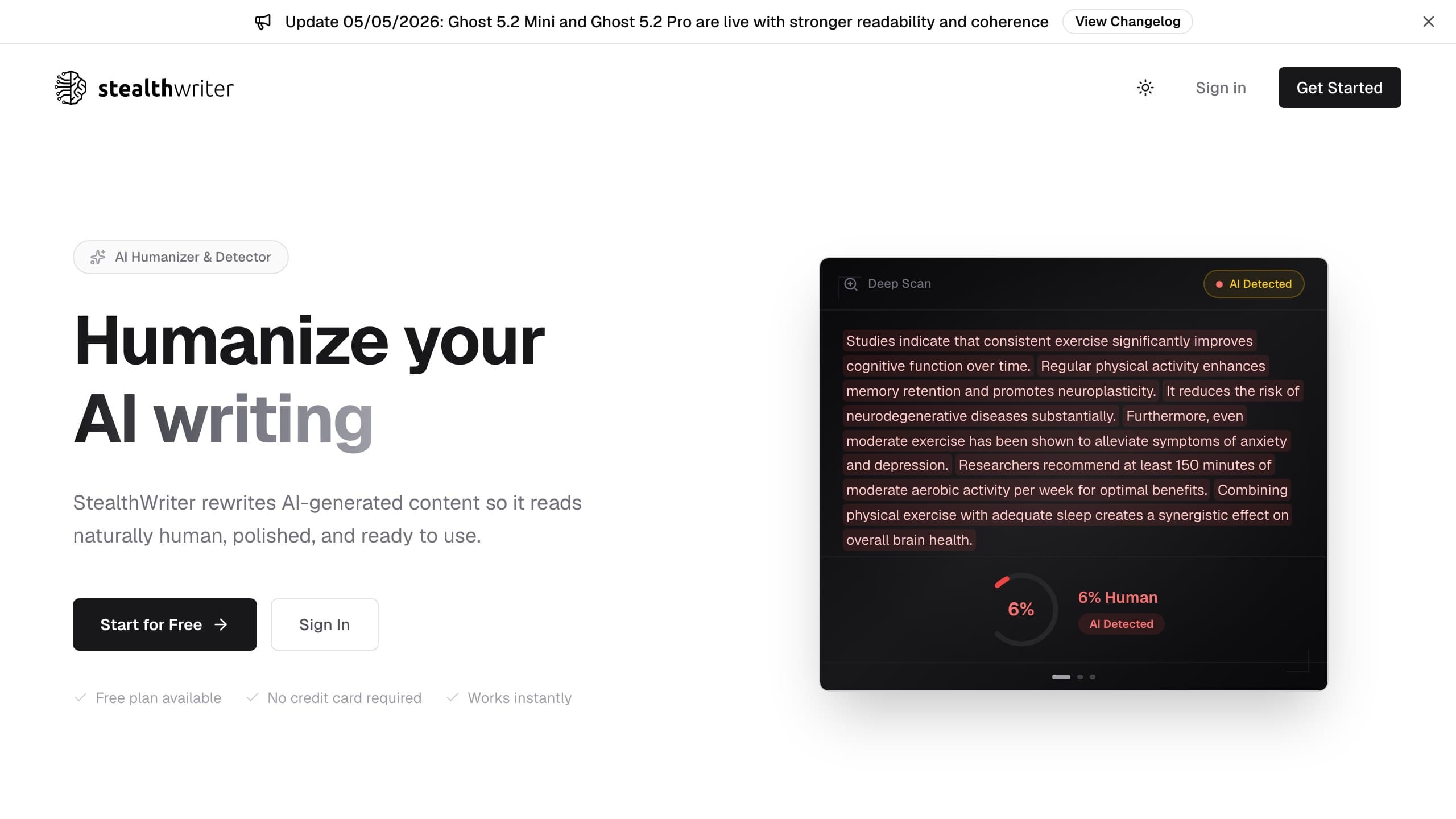
A genuinely useful multi-variant workflow held back by a rough billing reputation, better received by the tech crowd than by general buyers.
Best for: Bloggers who want to choose from several rewrites per run and will monitor their billing carefully.
Pros
- +Generates multiple variants (Ghost, Ninja, Phantom) so you pick the closest voice
- +Cuts the regenerate-and-retry loop that wastes quota elsewhere
- +Warmer reception on Product Hunt (~4.1) than on Trustpilot
Cons
- −Low Trustpilot score (~2–2.8) on a small sample, with serious billing complaints
- −Reviewers report charges after cancellation and trouble removing card details
- −No dedicated academic register, so formal passages drift conversational
- −API on higher tiers only
StealthWriter's real differentiator is that it generates multiple variants, labelled Ghost, Ninja, and Phantom, so you pick the version closest to your voice instead of accepting one fixed rewrite. That cuts the regenerate-and-retry loop that wastes word quota elsewhere, and the more technical Product Hunt crowd rates it reasonably well (around 4.1 there). The caution is its general-consumer reputation: Trustpilot sits low, around 2–2.8 stars on a small ~20-review sample, and the recurring complaints are serious, being charged after cancellation, difficulty deleting stored card details, and unresponsive support. If you subscribe, watch your billing closely. There's no dedicated academic register, so formal passages can drift conversational, and API access sits on higher tiers.
Pricing (verified June 2026)
- Trial: 250 words, one-time.
- Pro: $19/month, 30,000 words, all variants.
- Premium: $39/month, 100,000 words.
Who it's for
Bloggers and content creators who value picking from several rewrites, and who'll keep an eye on subscription charges.
6. Humbot, best for raw volume economics
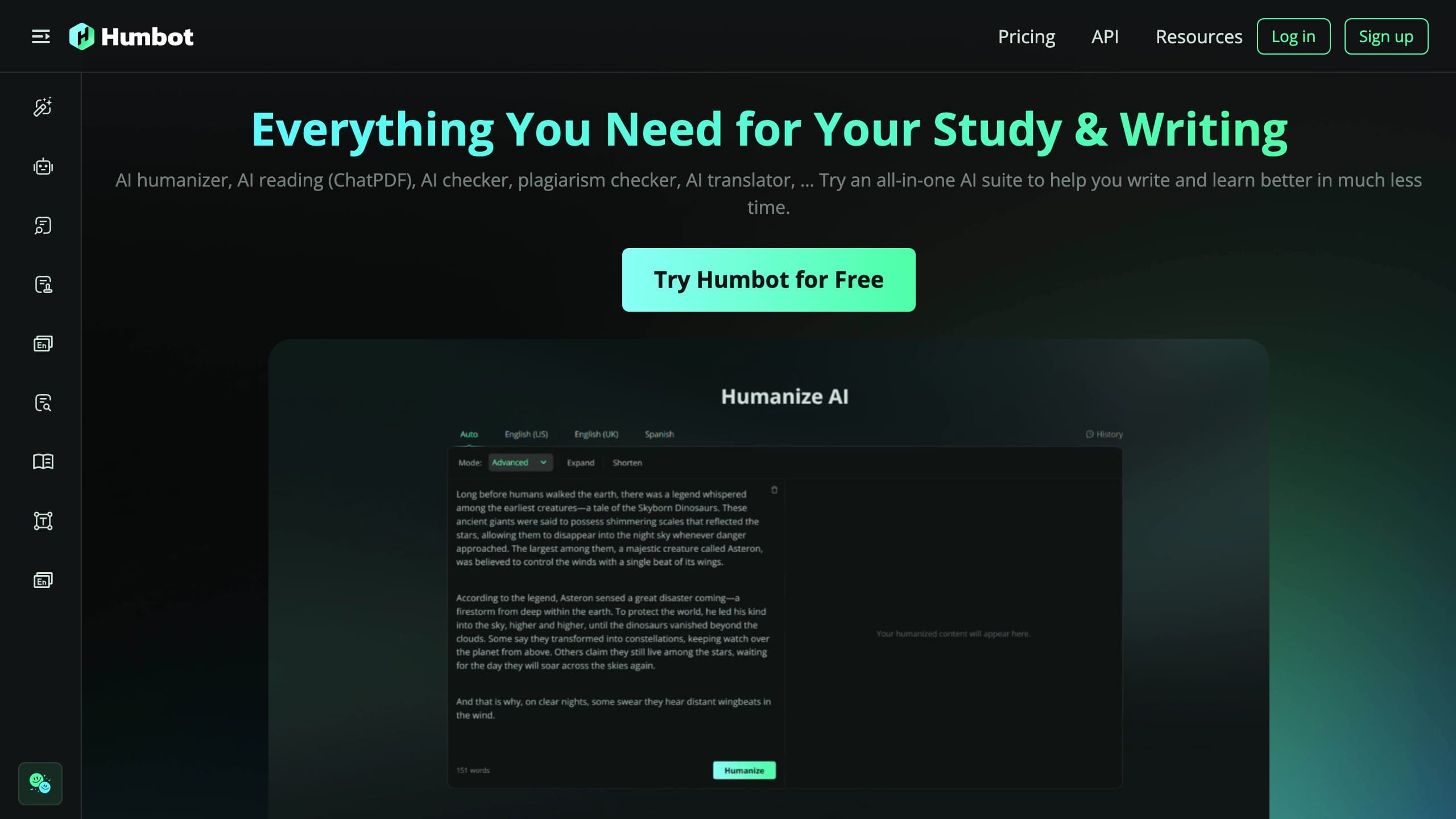
Unbeatable word-bundle economics if reputation is a secondary concern, but the output-quality and billing complaints are the loudest on this list.
Best for: Content teams pushing high volumes of low-stakes copy where no institutional checker is involved.
Pros
- +Largest word bundle at the lowest entry price here, $9.99 for 50,000 words
- +Fast and easy for non-technical users; bulk upload on the top tier
- +Reddit users find it useful for casual, low-stakes rewriting
Cons
- −Lowest reputation here: ~2.4 Trustpilot across 80+ reviews
- −Reviewers report word-salad output and text that’s still flagged
- −Complaints about continued/unauthorized charges and slow support
- −Bulk and API gated to the $49.99 Ultra tier
Humbot is built around throughput: the largest word bundle at the lowest entry price in this set, plus bulk upload on the top tier. If you're humanizing SEO articles or client blog batches where no institutional checker is involved, the raw economics are hard to beat. But this is where price and reputation pull hardest in opposite directions, at the time of writing Humbot holds about 2.4 stars across 80+ Trustpilot reviews, the lowest here, with a recurring complaint pattern of garbled "word-salad" output, text that still trips detectors, and billing issues including charges that continue after cancellation. Reddit is warmer for casual use. Treat it as a volume tool for disposable content, not careful coursework, and its "plagiarism-free" guarantee overstates what any rewriter can promise.
Pricing (verified June 2026)
- Trial: 300 words, one-time.
- Basic: $9.99/month, 50,000 words.
- Ultra: $49.99/month, bulk and API.
Who it's for
High-volume content teams optimizing for cost-per-word on low-stakes copy, who will proofread every output by hand.
7. BypassGPT, budget casual pick
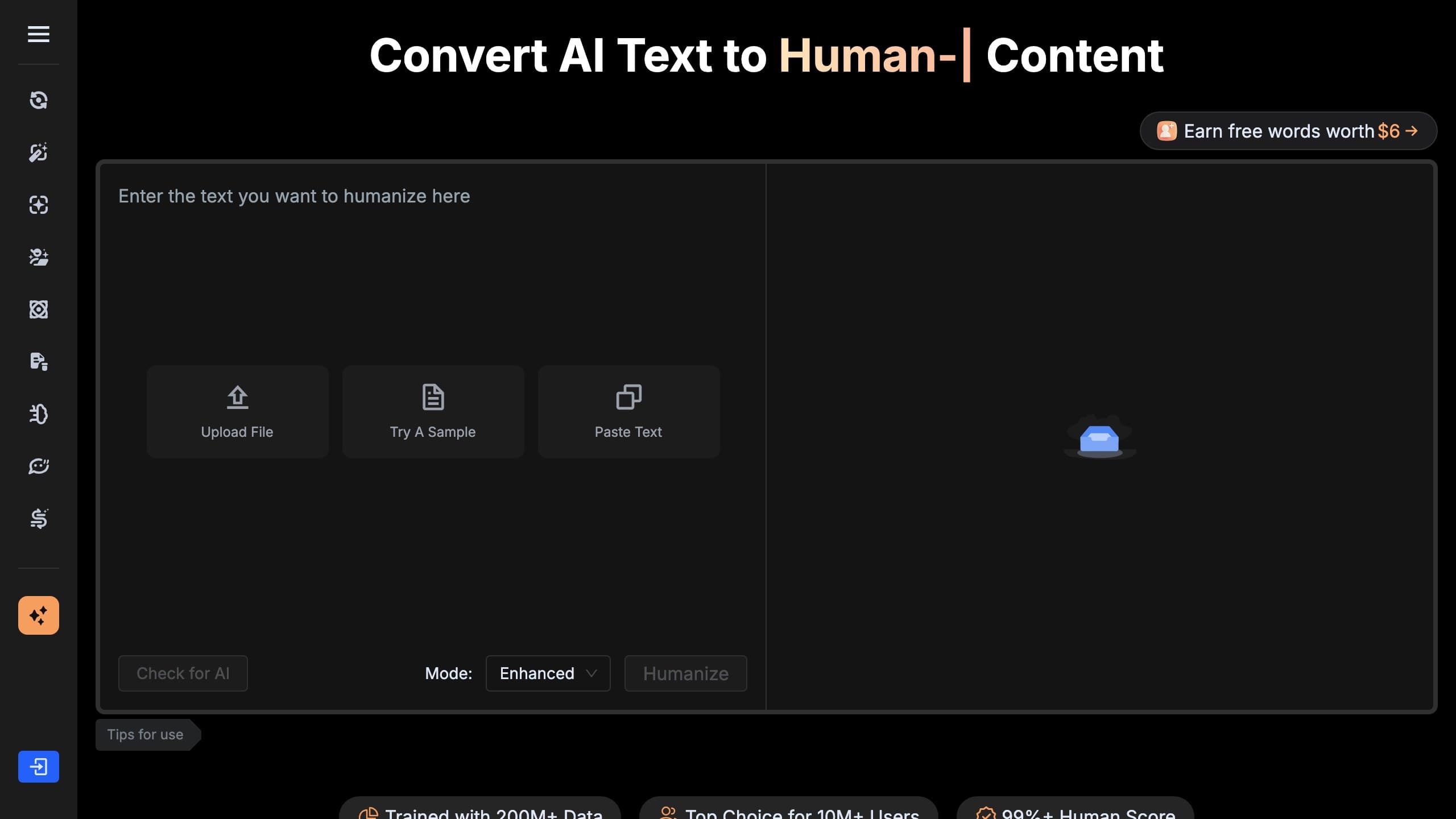
A clean, cheap paste-and-go editor for casual content, let down by a tiny trial, an input cap, and a refund policy reviewers struggle with.
Best for: Hobbyists and low-stakes content where cost matters more than polish or support.
Pros
- +Clean, almost learning-curve-free editor
- +Competitive per-word cost on its Pro tier at volume
- +Aggressive mode suits a conversational blog voice
Cons
- −Smallest trial here (150 words, lifetime), so proper evaluation is nearly impossible
- −~8,000-character input cap forces long drafts into chunks
- −Trustpilot ~3.2–3.5; reviewers cite stray characters and hard-to-claim refunds
- −No API, Chrome extension, or Word add-in
BypassGPT is a clean paste-and-go editor with competitive per-word pricing on its Pro tier. Two things hold it back: an ~8,000-character input cap that forces you to split long drafts, and a tiny 150-word lifetime trial that makes proper evaluation before paying nearly impossible. Its Trustpilot reputation sits around 3.2–3.5 stars across 200+ reviews, with recurring complaints about stray random characters appearing in output and a money-back guarantee reviewers describe as hard to claim once you've used more than about 1,000 words. Its aggressive mode can introduce colloquialisms that read wrong in formal writing. Good enough for newsletters and hobby blogs; the wrong default for a dissertation.
Pricing (verified June 2026)
- Trial: 150 words, one-time.
- Basic: $14.99/month, 15,000 words.
- Pro: $27.99/month, 50,000 words, aggressive mode.
Who it's for
Budget-conscious hobbyists writing casual content who'll proofread for artifacts and don't need integrations.
How to choose
Match the tool to your real constraint, not to a headline:
- Want one default with proper modes and a recurring free tier? WriteHybrid.
- Want the most-trusted, student-friendly option? Phrasly.
- Care most about the editing experience? WriteHuman.
- Want a recognizable brand and don't mind the price? Undetectable.ai.
- Want several rewrites to pick from per run? StealthWriter.
- Pushing high volume where no academic checker is involved? Humbot.
- On the tightest budget for casual content? BypassGPT.
None of these should be chosen on a vendor's own evasion marketing. Use the free tiers to test two of them on the same passage against the detector you actually face.
Also tested (not in the top seven)
The ranked list above covers the seven tools I'd recommend to most readers. Two others in our review library didn't make that cut but are worth knowing about if your constraints are niche:
- AIHumanizer — a cheap, single-mode rewriter with competitive per-word pricing at volume and a tiny 300-word trial. Useful for high-volume casual content if you've validated it on your own detector; thin review history and billing complaints are the cautions.
- Walter Writes — a casual-leaning humanizer with friendly UX and strong per-word value for blog and marketing copy. Polarized billing reviews and no academic mode make it a harder pick for formal coursework.
Neither belongs in the default top seven, but if you're optimizing purely for cost per word on low-stakes content, read the full reviews before paying.
The freshness problem: why a 2024 ranking is worthless now
This category does not sit still, and that's the strongest reason to distrust any static leaderboard. In late August 2025, Turnitin shipped a detector update that specifically targeted humanizer output patterns, and tools across the board, several named here, per their own user reviews, saw less consistent results overnight. The other detectors don't stand still either: GPTZero, Originality.ai, and Copyleaks each push their own revisions on no shared timetable. A ranking that quoted some confident bypass figure in 2024 was describing a moment that no longer exists. That's precisely why this page ranks on price, free tier, modes, UX, and reputation, durable things you can verify, rather than on detector scores that expire the week a model retrains.
Detection: what we can and can't tell you
Here's the part the affiliate posts skip. Every tool here markets itself on beating named detectors, but detection outcomes vary enormously by the exact text, its length, and which detector, and which version of it, runs the check. AI detectors disagree with each other constantly on the same paragraph, and results swing wildly by topic and length. No tool, ours included, can promise you a pass.
The only number that matters is the one you generate yourself: paste your real draft, humanize it, and run the output through the exact detector your audience uses, whether that's GPTZero, Turnitin, Originality.ai, or Copyleaks, before you submit anything graded or published. Anyone selling you a guaranteed percentage is selling you marketing. From hands-on use, the pattern I'd flag is that casual and marketing copy humanizes most cleanly, while dense academic passages with preserved terminology and citations are where any humanizer is most likely to leave a detectable fingerprint.
How to get the most natural output
Whichever tool you land on, a few habits consistently produce text that reads like a person wrote it:
- Start with a clean draft. Fix factual and structural problems first, no humanizer improves your argument, only its phrasing.
- Pick the register deliberately. Set Academic for coursework or Marketing for web copy where the tool allows it, rather than accepting a generic rewrite.
- Treat the rewrite as a first pass. A short manual edit, varying sentence length, cutting a repeated transition, does more for naturalness than re-running the tool five times.
- Protect citations and key terms. Humanizers mangle quoted material and technical vocabulary; lock those down by hand afterward.
- Run it through more than one detector. GPTZero, Turnitin, and Originality.ai disagree constantly; passing one is not passing all.
- Never submit unread. The fastest way to get flagged is pasting machine output with a stray character or a citation the tool quietly broke.
Frequently asked questions
Related reading
Try WriteHybrid on your text
Paste AI-generated copy below. 500 humanized words free every month after signup.
Was this page helpful?
Your feedback helps us improve our testing write-ups.