Best AI Humanizers for Students (2026): An Honest, Budget-First Ranking
Tools ranked in this guide





Disclosure. I'm Huzefa Abbasi, founder of WriteHybrid, so my own tool topping a student ranking deserves a skeptical read. This comes from hands-on use, each tool's public pricing checked at its live checkout in June 2026, and publicly visible Trustpilot and Reddit reviews, not a lab study, and there are no invented pass-rate numbers here. Whether a rewrite clears the AI-detection checker your school runs depends on your own text and that specific system, so test it there yourself. This guide assumes you're refining drafts of your own ideas; submitting fully AI-generated work as original is academic dishonesty, so check your institution's policy first.
What students actually need (and what listicles get wrong)
Students get burned by rankings that sort tools by the size of the affiliate banner. When you're on a stipend and a deadline, the things that matter are different and unglamorous: a free tier that survives a real assignment, an entry price you can actually afford, an interface you don't have to learn, and billing that won't quietly charge you $60 the week before rent. So this ranking weights those, plus how each tool feels to use day to day, not detector marketing I can't stand behind.
Three mistakes I see students make constantly, and which this list is built to avoid:
- Paying for a locked mode. The "Academic" or "Enhanced" setting you compared is sometimes gated behind a tier above the price you saw. Always check the price for the mode you actually need.
- Treating a one-time trial as a plan. A 200-word lifetime trial is enough for one paragraph, not a semester, a recurring free tier is worth far more.
- Choosing on the wrong detector's reputation. A tool famous for beating one checker is irrelevant if your syllabus names a different one.
There are no pass-rate percentages on this page, because they'd be dishonest: any such number is one detector version against one passage on one day. The only result that counts for your grade is the one you generate on your own draft, on your school's checker.
At a glance (pricing verified June 2026)
| Tool | Free tier | Entry paid | Ease of use | Student watch-out |
|---|---|---|---|---|
| WriteHybrid | 500 words/mo, recurring, no card | $9/mo · 10k words | Paste, pick mode, run | Free quota is small for long papers |
| Phrasly | 200 words, one-time | $12.99/mo · 25k words | Plain, student-shaped | Trial auto-renews to paid |
| WriteHuman | 200 words, one-time | $12/mo Basic | Clean side-by-side editor | Enhanced mode is Pro-only ($22) |
| Undetectable.ai | 250 words, one-time | $14.99/mo · 10k words | Familiar, brand-name UI | Trial conversion & credit forfeiture |
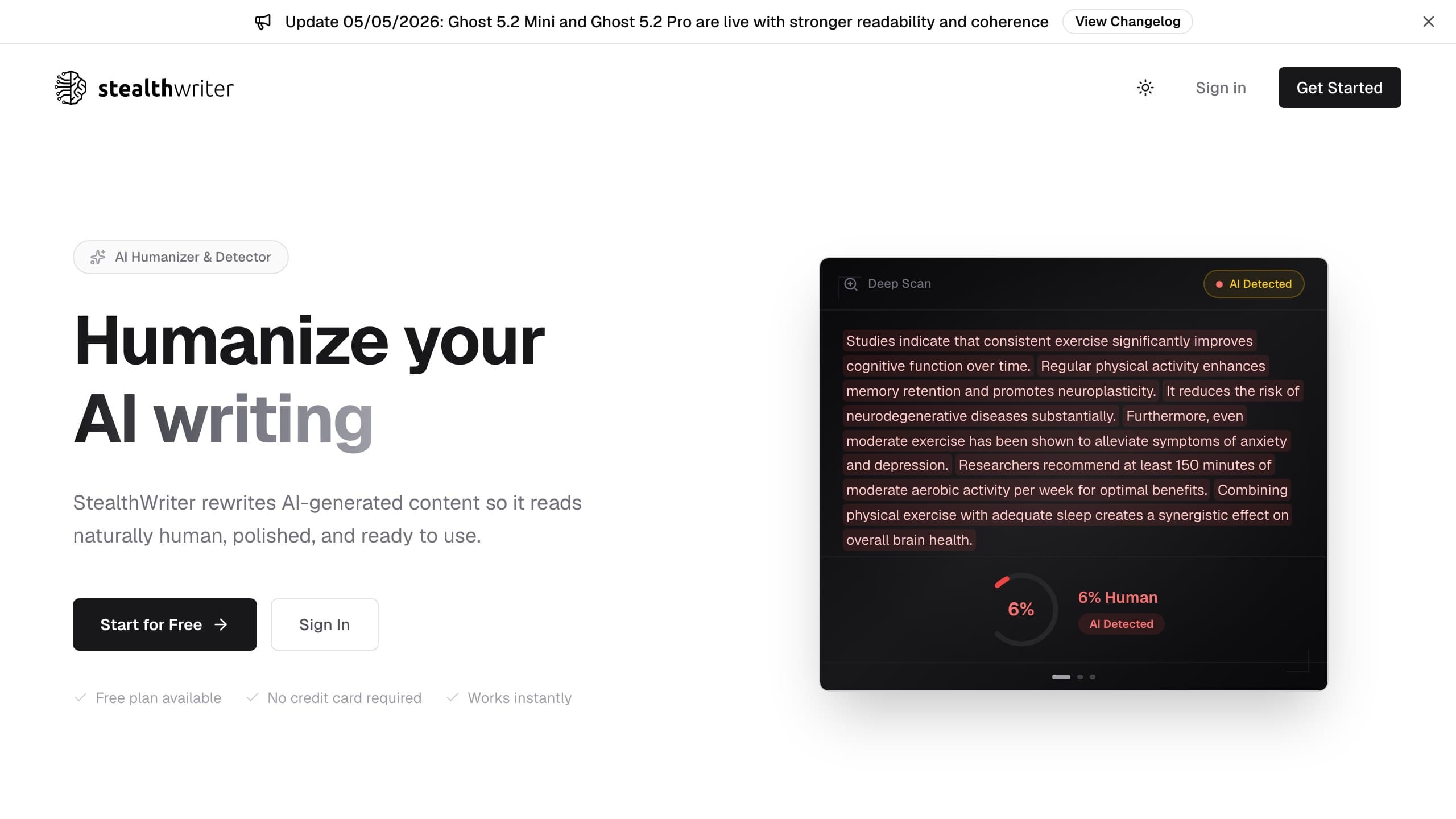
| StealthWriter | 250 words, one-time | $19/mo · 30k words | Variant picker, a bit fiddly | Hard to cancel; pricey for students |
The ranking, in order
Ranked for students: a genuinely usable free tier and honest billing come first, then entry price, ease of use, and how the output reads. Spot-check the top one or two on a real assignment before paying.
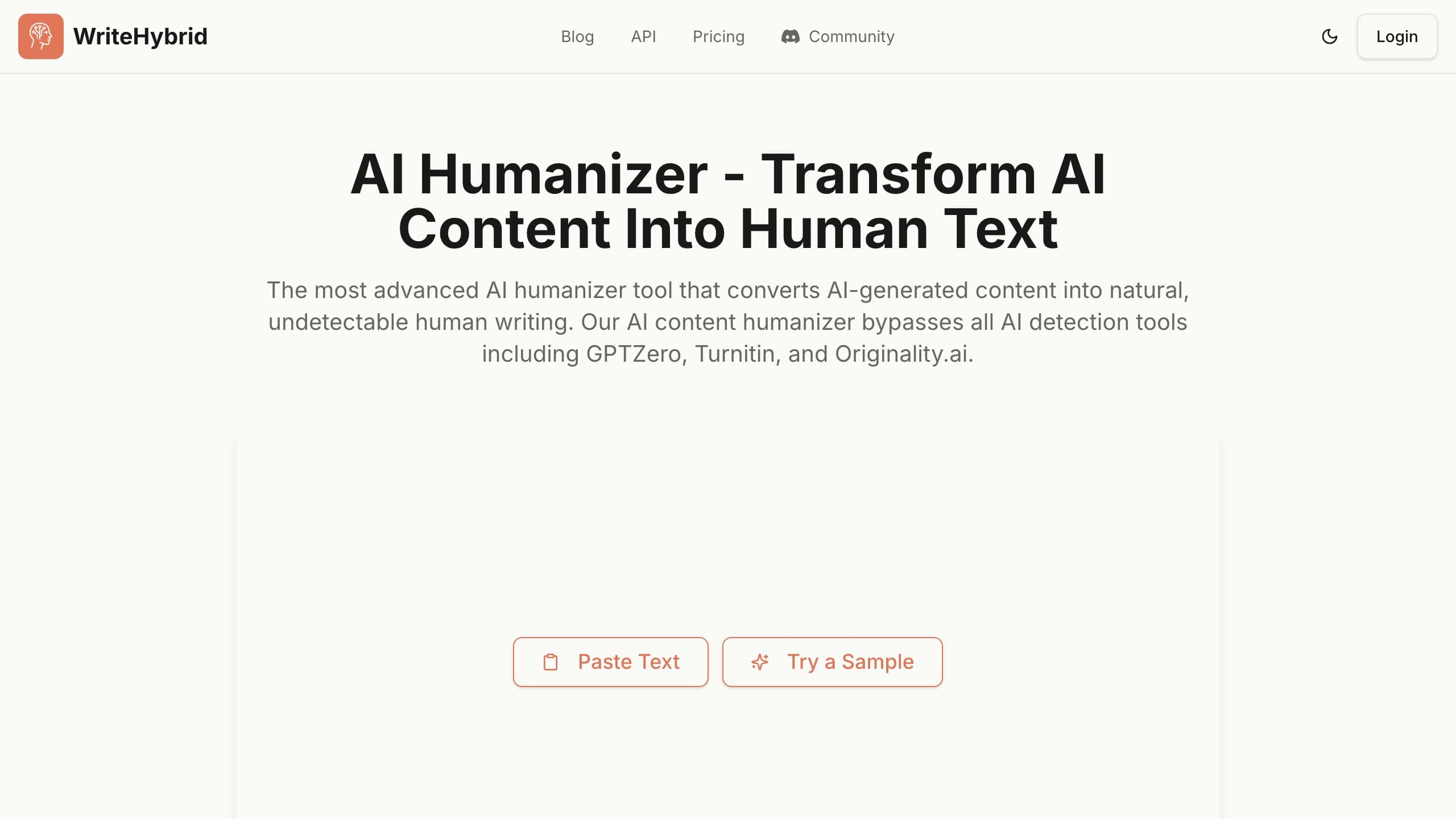
1. WriteHybrid, best free tier for coursework
The most student-friendly economics: a recurring no-card free tier with Academic mode included, and the lowest paid entry price in this list.
Best for: Students who want an academic register and a tool they can use all term without paying upfront.
Pros
- +Recurring 500-word monthly free tier, no card, with Academic mode on the same engine as paid plans
- +Cheapest entry price here at $9/month, plus a clear 14-day refund
- +Genuinely simple: paste, pick a mode, run, no learning curve
- +Honest billing, no trial-to-paid trap to get caught by
Cons
- −500 free words won't cover a long paper in one pass, work section by section
- −Web-only; no offline app
- −It's my product, so cross-check it against the alternatives below
I build this, so factor that in, but the student case rests on facts you can check, not on my word. The free tier is recurring: 500 words every month, no card on file, with Academic mode included, running on the same engine as the paid plans. That's roughly a short essay section each month at zero cost, and over a year it's genuinely enough to keep using on real assignments rather than a teaser that expires after one paragraph.
On price, the paid plans are the cheapest in this group: $9/month for 10,000 words on Starter, $19/month for 50,000 words plus API access on Pro, with a 14-day refund if you upgrade and change your mind. And the workflow is about as simple as it gets, paste, pick Academic, run, read, which matters when you've got a deadline and no patience for a dashboard.
The honest limits: 500 words won't cover a long term paper in one pass, so you humanize section by section, and no tool, mine included, can promise your school's checker will agree. Read aloud for logic breaks before you submit.
Pricing (verified June 2026): Free, 500 words/month, recurring, includes Academic mode. Starter, $9/month, 10,000 words. Pro, $19/month, 50,000 words plus API. Modes: Academic, Marketing, Casual, Technical.
2. Phrasly, best dedicated budget specialist
A tool that speaks student in both interface and output, at a low per-word cost, as long as you manage the trial billing carefully.
Best for: Undergraduates who want a plain, student-shaped tool that's cheap to run across a semester.
Pros
- +Plain, student-shaped interface and essay-shaped output, no enterprise clutter
- +Preserved formatted citations well in my use
- +Low effective per-word cost on the student plan; best-rated competitor here (~4.4 stars)
Cons
- −Free trial auto-renews into a paid plan, set a cancellation reminder
- −Conclusions occasionally get reordered; check your flow after a pass
- −No API or team features; reviewers flag inconsistency against Turnitin
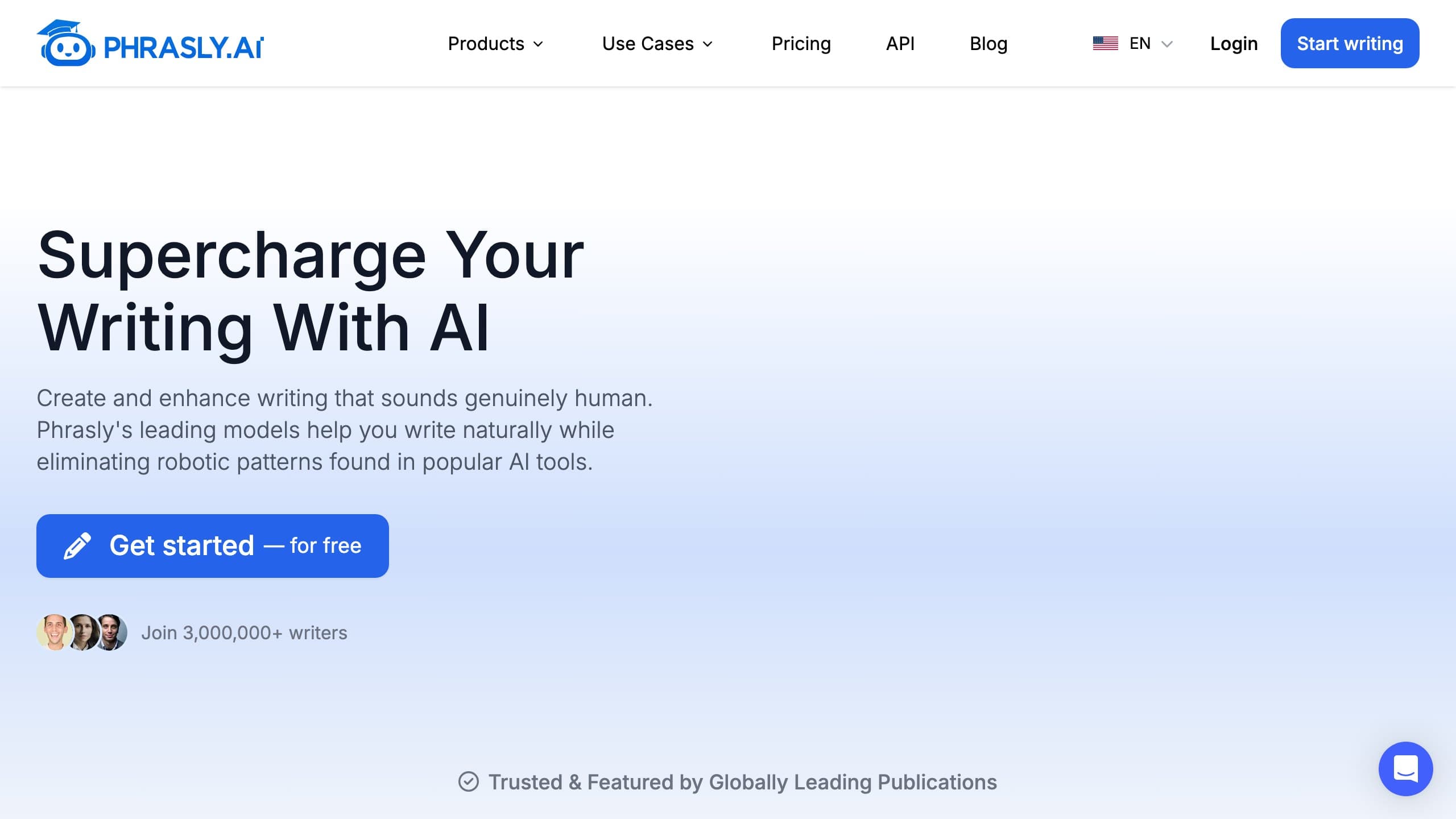
Phrasly speaks student in both its interface and its output, short sentences, plain connectors, essay-shaped paragraphs rather than brochure hype. It preserved formatted citations well in my use, and the Student plan is priced for monthly essay volume, which makes it the strongest dedicated budget alternative to a free tier. For a first-generation student wary of enterprise dashboards, its plainness is genuinely an advantage.
It's also the best-regarded competitor here on reputation, around 4.4 stars across hundreds of Trustpilot reviews, with students consistently praising how easy it is. The honest gaps: the trial is a tight 200 words, there's no API or team features, conclusions occasionally get reordered (so check your argument's flow after a pass), and, most important for your wallet, multiple reviewers report the free trial quietly rolling into a paid subscription. Set a cancellation reminder, and ideally use a virtual card.
Pricing (verified June 2026): Trial, 200 words, one-time. Student, $12.99/month, 25,000 words, academic mode. Pro, $24.99/month, 75,000 words.
3. WriteHuman, best editor for learning to revise
The nicest editor here for revision, a clean diff view that's genuinely good for learning what changed and why.
Best for: Students who learn from seeing exactly what changed and want to improve their own editing.
Pros
- +Clean diff view and readable typography, the most pleasant editor for revision
- +Good teaching tool: a writing-centre tutor could use it to show editing
- +Replies to most negative Trustpilot reviews, a reassuring support signal
Cons
- −$12 Basic plan is Standard mode only; Enhanced lives on Pro at $22
- −200-word trial runs Standard only and is too small to judge
- −No API; reviewers describe detection as 'works sometimes, not others'
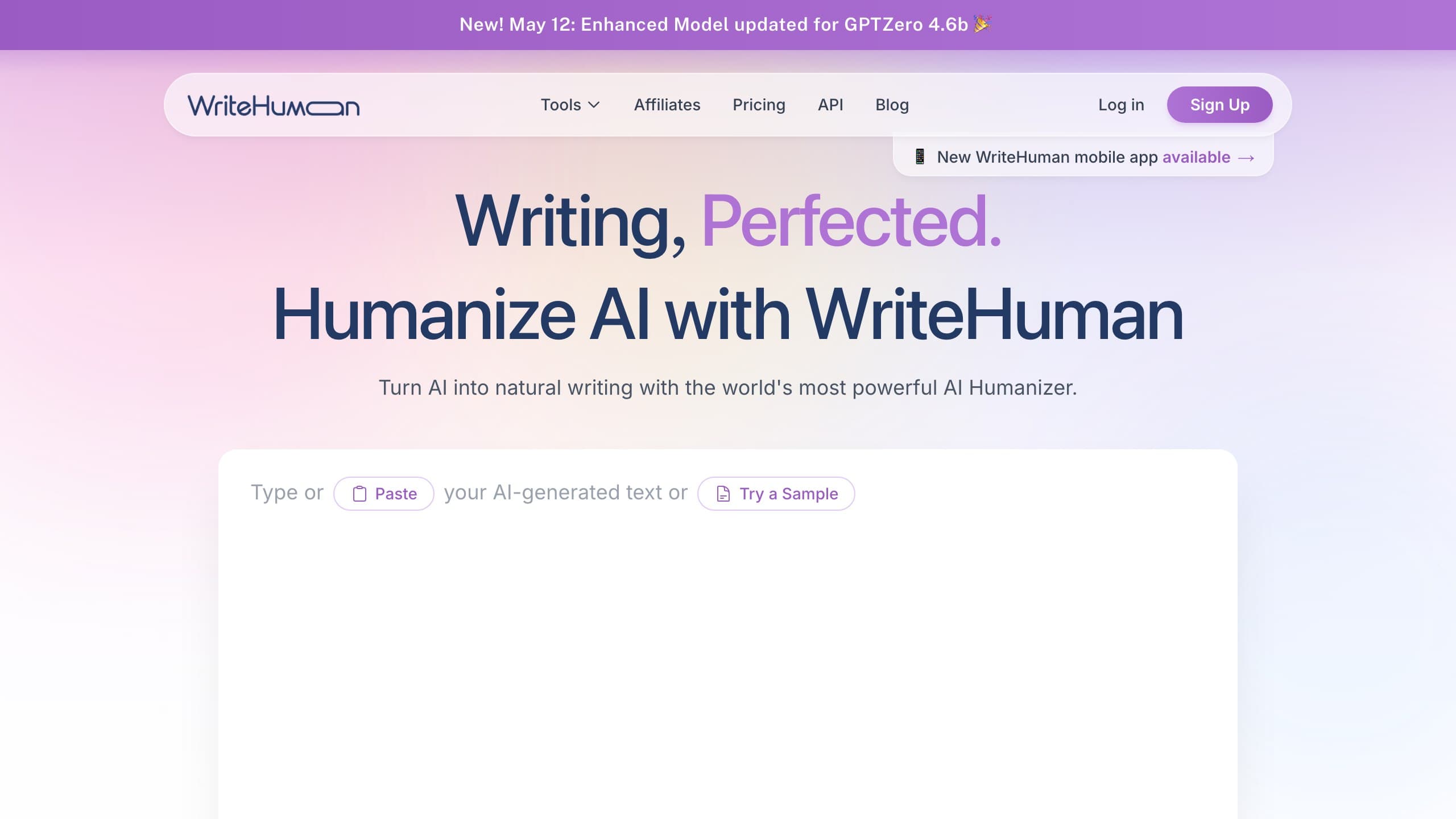
WriteHuman's clean diff view, readable typography, and minimal clutter make it the nicest editor here for revision, a writing-centre tutor could use it to teach editing, and seeing each change side by side genuinely helps you build the skill yourself rather than just accepting a black-box rewrite. (It's a different company from WriteHybrid, despite the similar name.)
The trap to know before you pay is the same one this list warns about: the $12 Basic plan only includes Standard mode, while the Enhanced mode lives on Pro at $22, and the 200-word trial runs Standard only, so the version you tried may not be the version that's actually good. There's no API for power users. On reputation, it sits around 3.9 stars across roughly 200 reviews; the recurring theme is inconsistency ("works sometimes, not others") plus monthly-versus-annual billing confusion, though the company does reply to most negative reviews. Pick it when your priority is the editing experience and you'll pay for Pro.
Pricing (verified June 2026): Trial, 200 words, one-time. Basic, $12/month, Standard mode. Pro, $22/month, unlocks Enhanced.
4. Undetectable.ai, capable but pricey, watch the billing
A familiar brand that works for low-stakes drafts, but it's the priciest entry here and carries the heaviest billing complaints, proceed carefully.
Best for: Students who want a known brand for low-stakes drafts and have room in the budget.
Pros
- +Familiar, polished interface and a useful free detection scanner
- +Workable for low-stakes, survey-level drafts
Cons
- −No dedicated academic register; leans toward inflated vocabulary
- −Priciest entry here ($14.99) against $9 alternatives
- −Heaviest billing complaints, trial conversion, credit forfeiture, refund refusals
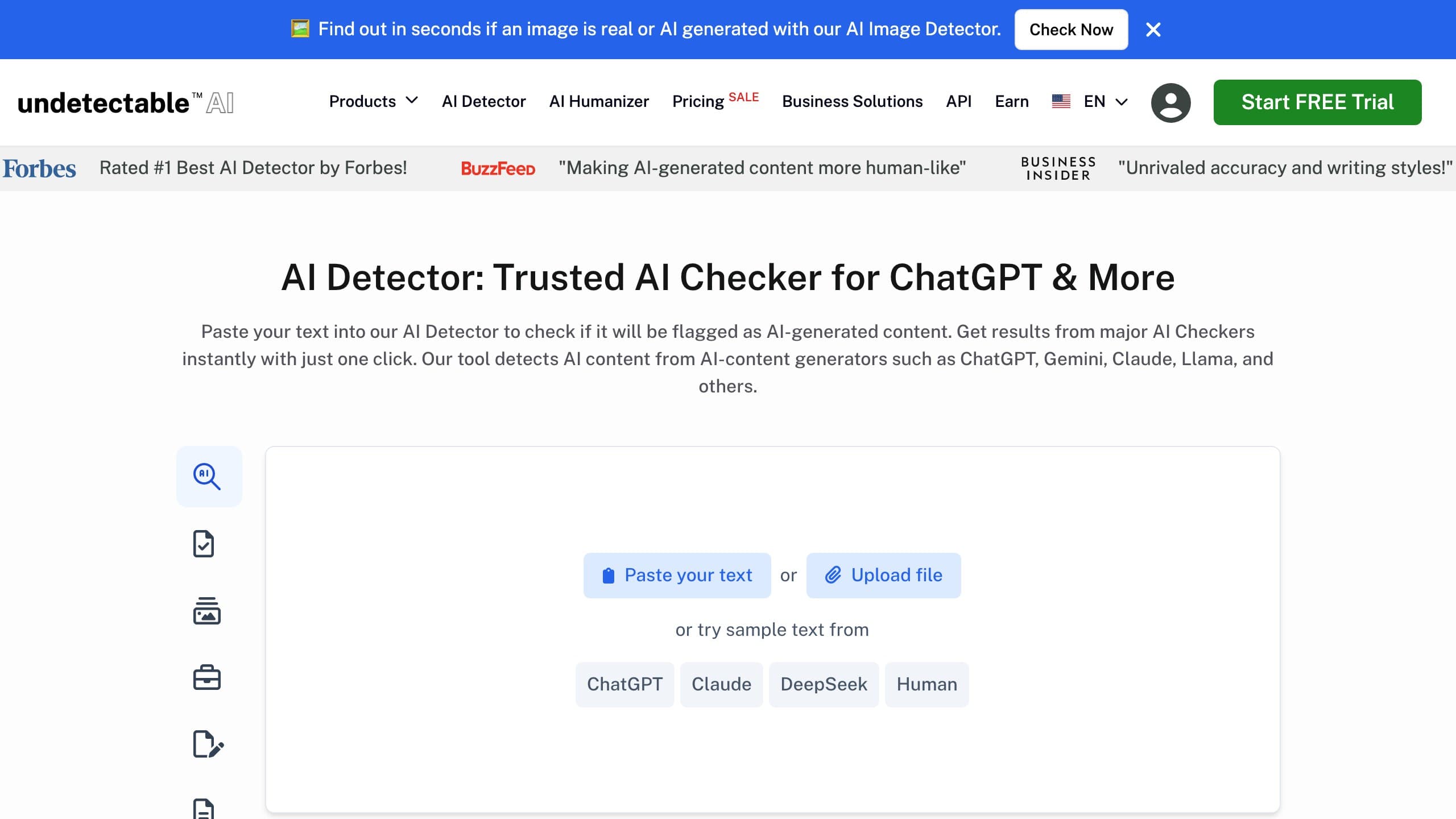
Undetectable.ai markets aggressively to students, but for coursework it's a mixed bet. There's no dedicated academic register, it leans toward inflated vocabulary ("facilitate" where "help" would do), and the entry price is the steepest here, a real consideration against $9 alternatives when you're counting every dollar. The 250-word trial is enough for a single paragraph test, and the free detection scanner is genuinely handy.
The reason it ranks fourth for students specifically is billing risk, which hits students hardest. Ratings vary by source, Trustpilot's main page sits in the low-to-mid 3s while several independent reviews cite figures closer to 2 across 700-plus reviews, but the complaint pattern is consistent and alarming for anyone on a tight budget: a short trial that converts to a charge, credit forfeiture when you cancel, and refund refusals. It's reasonable for low-stakes drafts; I'd avoid it for citation-heavy arguments, and if you do try it, use a virtual card with a spending limit and read the cancellation terms before you click Start Trial.
Pricing (verified June 2026): Trial, 250 words, one-time. Starter, $14.99/month, 10,000 words. Pro, $29.99/month, 50,000 words.
5. StealthWriter, for voice-led assignments, if the budget stretches
Student-viable for blog-style and reflective assignments, but pricey for a student and the cancellation reputation is the weakest here.
Best for: Blog-style assignments, reflective journals, and opinion pieces, not formal research papers.
Pros
- +Multi-variant output lets you pick the least conversational rewrite
- +Strong on voice-forward, reflective writing
- +Friendlier on ProductHunt (~4 stars) than its small Trustpilot sample
Cons
- −$19 Pro plan stretches a student budget; no real free tier, just a one-time 250 words
- −No academic register; formal passages drift casual on aggressive variants
- −Reviewers report difficulty cancelling and removing card details
StealthWriter is student-viable for voice-forward work, and much less so for formal research papers. Its multi-variant output lets you pick the least conversational rewrite, try the Ghost variant first on a reflective-essay intro, which is a nice touch for blog-style assignments, journals, and opinion pieces. The rewrite engine is mature and reads fluently on general prose.
For students specifically, the problems are budget and billing. At $19, the Pro plan stretches a student budget, and there's no real free tier, just a one-time 250 words. Because there's no academic register, formal passages drift casual on the more aggressive variants, so you'll re-formalise transitions by hand. And the cancellation reputation is the weakest in this group: Trustpilot is low (around 2 to 3 stars) on a small sample, with recurring complaints about not being able to remove card details or cancel cleanly, and unresponsive support; ProductHunt is friendlier at about 4 stars. Good for reflective prompts; start monthly and use caution on APA research papers.
Pricing (verified June 2026): Trial, 250 words, one-time. Pro, $19/month, 30,000 words, all variants. Premium, $39/month, 100,000 words.
The honour-code question, answered straight
This is the part most student listicles skip, so let me be direct. Submitting fully AI-written work as your own is academic dishonesty at essentially every institution, full stop. These tools are not a way around that, they're for refining the expression of work you actually did: loosening machine cadence in a draft you wrote, can explain, and could defend in a viva.
The line your institution draws usually sits exactly there. Many universities now permit AI assistance for editing and polishing while prohibiting AI-generated submissions, and Turnitin's AI bypasser detection, released on 27 August 2025, exists specifically to catch AI text that was run through a humanizer to hide its origin. Practically: read your course's AI policy before you start, keep the ideas and evidence genuinely yours, and never run quotations or reference entries through a humanizer. Used that way, a humanizer is a polishing step; used to disguise authorship, it's a risk to your degree, not a shortcut.
Why detection got harder in late 2025
If you tried a humanizer last year and it "worked," don't assume it still does. On 27 August 2025, Turnitin folded AI bypasser detection into its AI writing report, so text it judges to have been AI-generated and then humanized now counts toward the AI score, and a separate category flags AI text revised by a paraphrasing tool. Turnitin also stopped showing numbers for low scores (1–19%), using an asterisk instead to limit false positives.
The takeaway for a student is practical: detection on the exact tools you might be relying on shifted, quietly, and the only way to know where your draft stands is to check it now, not to trust a review (including this one) quoting last year's results. That's the whole reason this page refuses to publish pass percentages.
Detection: what we can and can't tell you
Now the blunt truth. No tool here, mine included, can promise your specific assignment will clear your school's checker. Detectors disagree, update without notice, and score different paragraph types differently. GPTZero is free to try but inconsistent, Turnitin sits inside your school's submission portal with its post-August 2025 bypasser layer, Originality.ai is the strictest if a client or journal ever runs it, and Copyleaks lands somewhere else again. One checker passing your work tells you nothing about the next.
What I can tell you qualitatively: tools with a genuine academic register (WriteHybrid, Phrasly) keep coursework readable and precise more reliably, while general humanizers are likelier to leave an inflated word or a softened claim that a marker notices regardless of any detector. The move that actually protects your grade is dull but reliable: humanize a single real paragraph, push it through whatever checker your school uses, and trust that over any marketing line, including mine.
How to choose on a student budget
A quick decision guide, by situation:
- Single assignment, no budget: WriteHybrid's recurring free tier, 500 words, no card, Academic mode included.
- A whole semester of work: WriteHybrid at $9/month or Phrasly at $12.99, compare the price for the mode you actually need, not the headline tier.
- You learn by seeing edits: WriteHuman, budgeting for Pro at $22 if you want Enhanced.
- A voice-led or reflective assignment: StealthWriter's variants, on a monthly plan.
- Always: spot-check two paragraphs before committing a cent, use a virtual card on any tool with trial-conversion complaints, and verify the output on your institution's checker.
Frequently asked questions
Related reading
Try WriteHybrid on your text
Paste AI-generated copy below. 500 humanized words free every month after signup.
Was this page helpful?
Your feedback helps us improve our testing write-ups.