Best ChatGPT Humanizers (2026): A Hands-On Ranking
Tools ranked in this guide





Disclosure. I'm Huzefa Abbasi, founder of WriteHybrid, so my own tool's place here isn't neutral. This ranking comes from hands-on use, each vendor's public pricing in June 2026, and the reviews real users leave on Trustpilot and Reddit, not a lab study, and there are no invented pass-rate numbers. Whether a humanized ChatGPT draft clears the AI detector your reader uses depends on your exact text, that specific checker, and which model produced the draft, since outputs shift between versions. Verify on your own checker.
What's actually distinctive about ChatGPT output
ChatGPT drafts carry recognizable habits: uniform paragraph lengths, hedging stacks like "it's important to note," a handful of overused transitions ("moreover," "furthermore," "in today's fast-paced world"), and an em-dash addiction. Newer reasoning models, o3 and GPT-5, tend to be denser and more uniform still. So for this ranking I cared about two ChatGPT-specific things on top of the usual criteria: whether a tool removes that list-heavy, evenly-paced cadence without crushing your meaning, and how it copes with the markdown, tables, and code fences ChatGPT loves to wrap around its prose. This page is for paste-from-ChatGPT workflows, not hand-typed drafts.
How I picked, honest criteria, not pass rates
I didn't run a benchmark, so I won't pretend to. The ranking weighs five things: hands-on use on real ChatGPT exports, pricing transparency, the genuineness of the free tier, whether you can set register before the rewrite, and each tool's real reputation on Trustpilot and Reddit. I deliberately ignored "100% undetectable" slogans and self-reported bypass percentages, because they expire the moment a model or a detector retrains. The honest goal isn't a magic number, it's a rewrite that reads like you wrote it and still answers the question you asked ChatGPT in the first place.
At a glance (pricing and ratings verified June 2026)
Ratings are approximate "at the time of writing" and vary by regional Trustpilot domain; confirm pricing at checkout.
| Tool | Free tier | Entry paid | ChatGPT fit |
|---|---|---|---|
| WriteHybrid | 500 words/mo, recurring | $9/mo · 10k words | Modes that target LLM cadence |
| WriteHuman | 200 words, one-time | $12/mo Basic | Best paste-and-edit loop (~4★) |
| Undetectable.ai | 250 words, one-time | $14.99/mo · 10k words | Good on ChatGPT marketing copy |
| StealthWriter | 250 words, one-time | $19/mo · 30k words | Several tonal variants per draft |
| Humbot | 300 words, one-time | $9.99/mo · 50k words | Bulk ChatGPT blog batches |
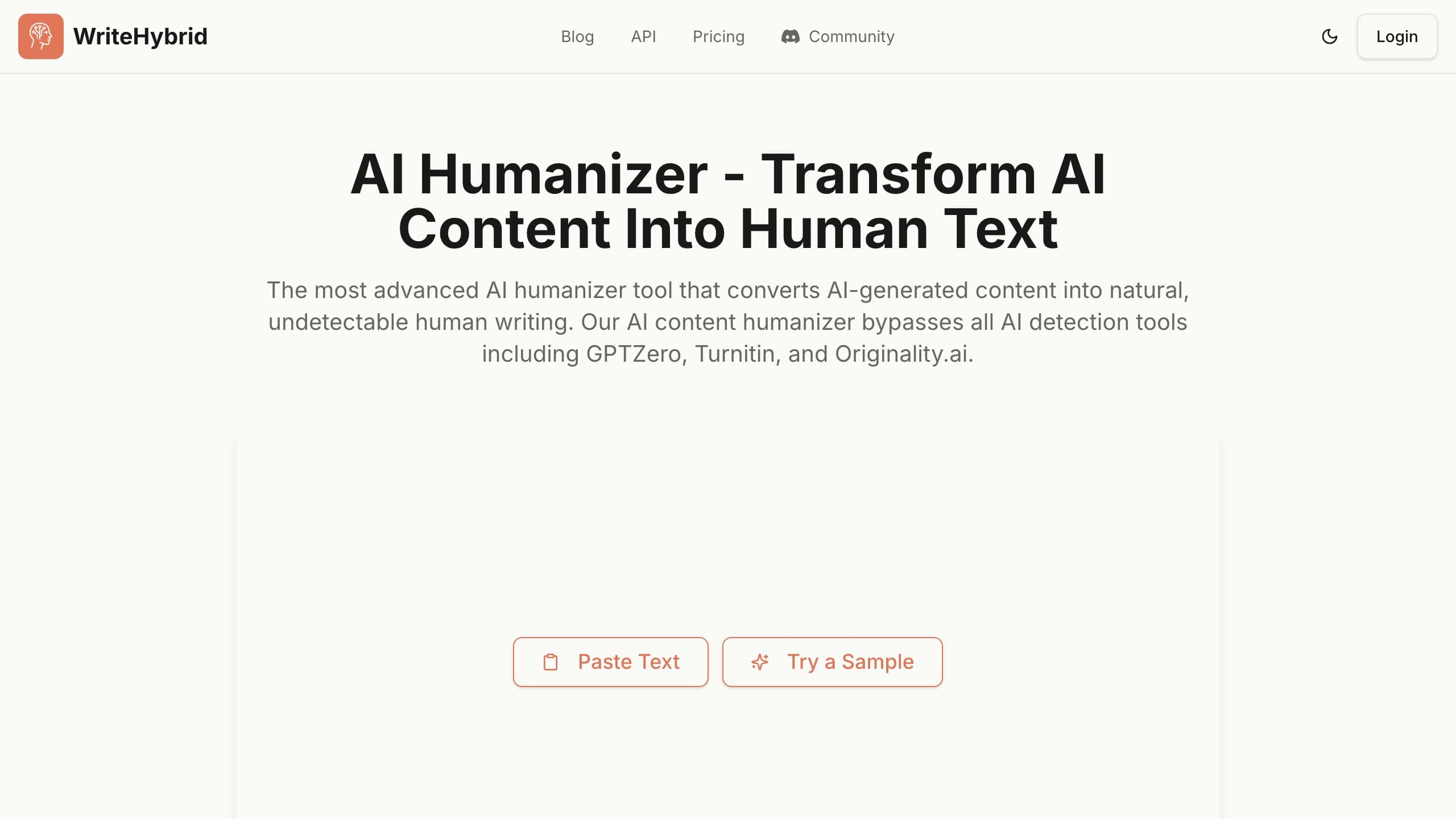
1. WriteHybrid, best for ChatGPT cadence
The best fit for paste-from-ChatGPT work: modes that target ChatGPT's uniform rhythm, a recurring free tier, and API on the entry plan, though I build it.
Best for: Paste-from-ChatGPT workflows that need the register set before the rewrite, on a budget.
Pros
- +Modes target the uniform paragraph length and transition stacks ChatGPT overuses
- +Recurring 500-word free tier handles a typical ChatGPT answer block or essay section
- +API on the $9 Starter plan suits copy-paste automation
- +14-day refund stated up front
Cons
- −Free quota is small for long ChatGPT exports
- −Web-only
- −Newer brand with a thinner public review trail
- −Cannot promise a detector outcome on any given export
I build this, so factor that in, but the fit for ChatGPT output is concrete. Its modes target the uniform paragraph length and transition stacks ChatGPT overuses, and you choose Academic, Casual, Marketing, or Technical before humanizing so the result matches where the text is going rather than flattening into one generic voice. The recurring 500-word free tier handles a typical ChatGPT blog section or essay block at about $0.0009 per word once you're paying ($9 ÷ 10,000), API access on Starter suits copy-paste automation, and there's a 14-day refund. The honest caveat: validate on your exact ChatGPT export, because model updates change the patterns, what works on a GPT-4o draft may behave differently on a GPT-5 one.
Pricing (verified June 2026)
- Free: 500 words/month, recurring, all modes.
- Starter: $9/month for 10,000 words, with API access.
- Pro: $19/month for 50,000 words.
Who it's for
Anyone whose primary workflow is pasting from ChatGPT and who wants register control plus a free lane to test real exports.
2. WriteHuman, best paste-and-edit loop
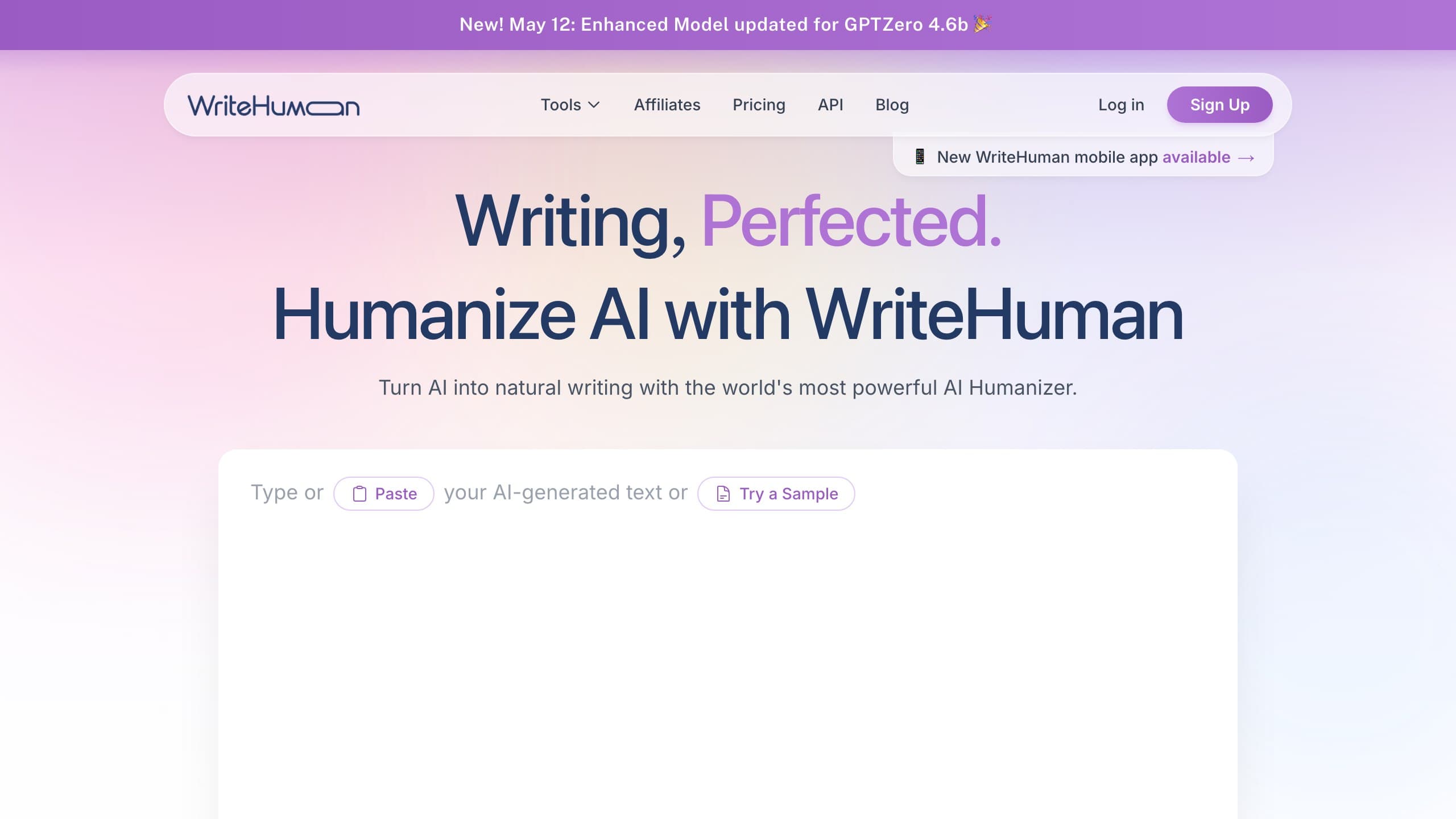
The nicest editor for the ChatGPT loop, paste, humanize, fix inline, backed by a solid ~4-star reputation, with billing caveats.
Best for: ChatGPT users who want to fix the model's vague wording inline after the rewrite.
Pros
- +Cleanest paste-and-edit editor for the assistant-reply workflow
- +Roughly 4 stars across ~200 Trustpilot reviews, reviewers praise ease of use
- +Good on casual ChatGPT emails and short-form replies
Cons
- −Stronger Enhanced mode is Pro-only at $22; $12 Basic is Standard-only
- −Reviewers report annual charges when expecting monthly, plus a no-refund policy
- −No browser extension to pull threads directly, copy-paste only
- −Won’t fix ChatGPT’s em-dash habit; trim those by hand
WriteHuman's editor is the nicest here for the ChatGPT loop: paste the assistant's reply, humanize, then edit in place exactly where the model was vague. Its reputation supports that, around 4 stars across roughly 200 Trustpilot reviews, with consistent praise for the clean interface. The honest counterweight is a recurring billing complaint: several reviewers describe being charged annually when they meant to subscribe monthly, then hitting a firm no-refund policy and slow support. It won't fix ChatGPT's em-dash habit for you, and Standard mode on the $12 Basic plan is fine for casual emails while the stronger Enhanced mode is Pro-only at $22. There's no browser extension to pull threads directly, so it's copy-paste only. (Different company from WriteHybrid.)
Pricing (verified June 2026)
- Trial: 200 words, one-time.
- Basic: $12/month, Standard mode.
- Pro: $22/month, unlocks Enhanced.
Who it's for
ChatGPT users who edit heavily after the rewrite and want the smoothest in-place editor, subscribing monthly on purpose.
3. Undetectable.ai, best for ChatGPT marketing copy
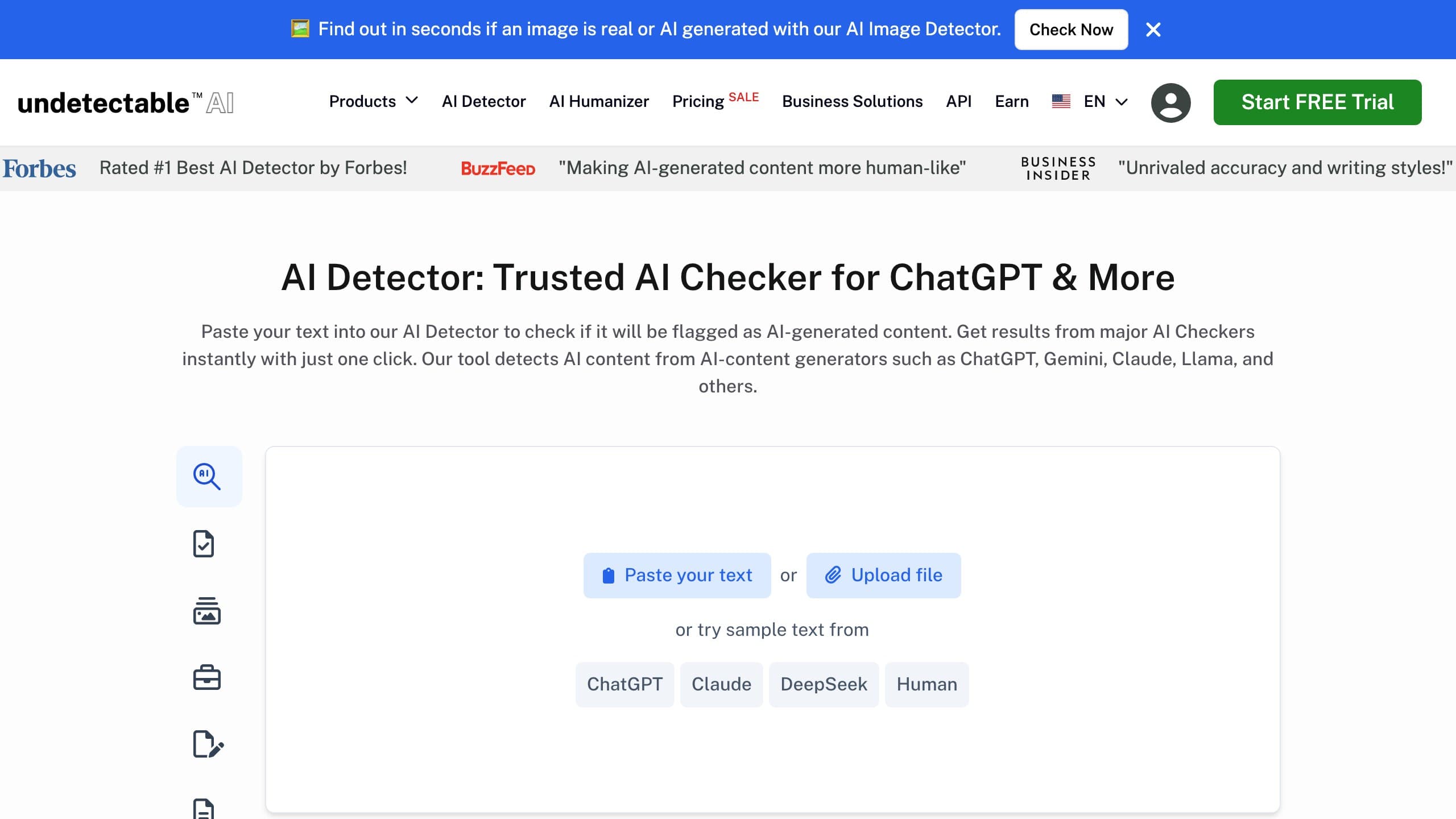
Strong on ads and landing pages built from ChatGPT drafts, but the priciest here, and the most billing-complained-about.
Best for: Landing pages, ads, and marketing copy generated from ChatGPT drafts.
Pros
- +Stronger mode strips ChatGPT hedging aggressively, good for ads
- +Bundled before/after view fits a tab-based ChatGPT workflow
- +Best-known brand with a large review base
Cons
- −Highest entry price in this set; strongest setting gated to Pro
- −Polarized reviews (~2–3.4 stars by region) with heavy refund/billing complaints
- −Its parser can stumble on ChatGPT bullet formatting, flatten lists first
- −Weaker on lab procedures and structured reasoning where meaning must stay exact
Undetectable.ai's stronger mode strips ChatGPT hedging aggressively, which is great for ads and weak for structured homework answers that need numbered reasoning. Its bundled before/after view fits the tab-based workflow many ChatGPT users already have. Two practical notes: flatten ChatGPT's bullet formatting before pasting, since its parser can stumble on lists, and remember the entry price is the highest here. On reputation, it's the most polarized tool on this page, its main Trustpilot profile sits around 3.4 stars across 800+ reviews, but some regional pages sit near 2 stars, and the recurring complaint pattern is charges after a "free trial" and difficult refunds. Strong on marketing copy; read the renewal terms before you commit.
Pricing (verified June 2026)
- Trial: 250 words, one-time.
- Starter: $14.99/month, 10,000 words.
- Pro: $29.99/month, 50,000 words.
Who it's for
Marketers turning ChatGPT drafts into ad and landing-page copy who value the brand and will watch their billing.
4. StealthWriter, best for repurposing one ChatGPT draft
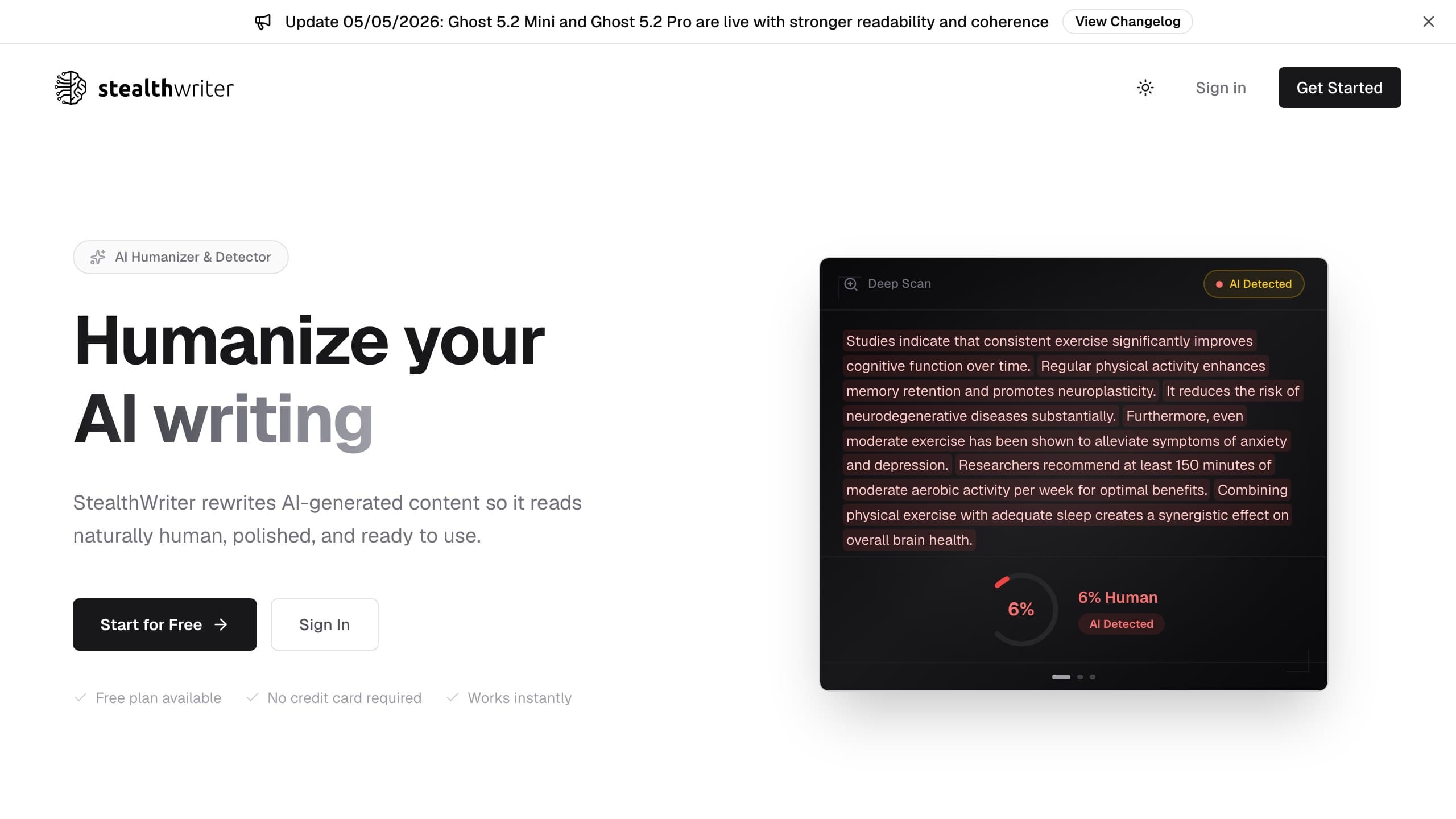
Turns one ChatGPT draft into several tonal versions, useful for repurposing, but watch the billing reputation.
Best for: Turning a single ChatGPT draft into a newsletter, a LinkedIn post, and a site article at once.
Pros
- +Multi-variant output (Ghost, Ninja, Phantom) maps cleanly to multiple formats
- +Ninja variant neutralizes ChatGPT’s stock conclusion paragraphs well
- +Better received on Product Hunt (~4.1) than on Trustpilot
Cons
- −Low Trustpilot (~2–2.8) on a small sample, with charges-after-cancellation complaints
- −Treats code blocks and JSON as prose, strip them before humanizing
- −Ghost variant can stay too formal on academic ChatGPT answers
- −No dedicated academic register
StealthWriter's multi-variant output is a natural fit for ChatGPT users: one single-voice draft becomes a few tonal options you can map to a newsletter, a LinkedIn post, and a site article. The Ninja variant is good for neutralizing ChatGPT's stock conclusion paragraphs without sounding robotic. The caution is reputation and parsing: on Trustpilot it sits low, around 2–2.8 stars on a small ~20-review sample, with recurring complaints about charges after cancellation and trouble removing card details (the Product Hunt crowd rates it higher, near 4.1). Strip code blocks and JSON before you humanize, since it treats them as prose, and on academic ChatGPT answers the Ghost variant can stay too formal, try Phantom for a more conversational repurpose.
Pricing (verified June 2026)
- Trial: 250 words, one-time.
- Pro: $19/month, 30,000 words, all variants.
- Premium: $39/month, 100,000 words.
Who it's for
Creators repurposing one ChatGPT draft into several formats who'll monitor subscription charges.
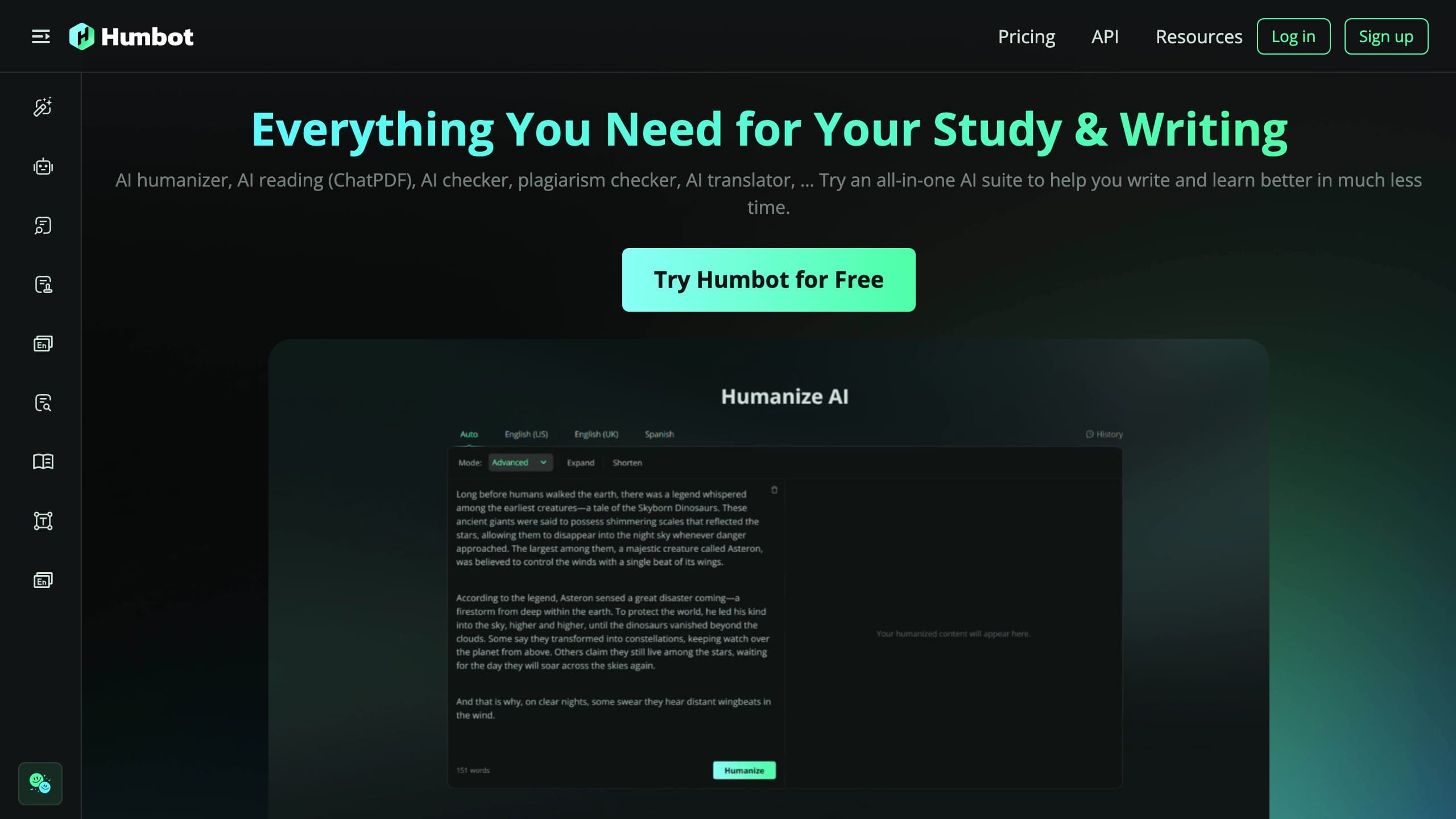
5. Humbot, best for bulk ChatGPT batches
The volume play for ChatGPT blog batches, cheapest per word, weakest reputation, proofread everything.
Best for: Power users exporting many short ChatGPT posts at once for SEO repurposing.
Pros
- +Top tier accepts bulk paste; $9.99 Basic’s large cap covers heavy repurposing
- +ChatGPT numbered steps humanize cleanly
- +Reddit users find it handy for casual posts
Cons
- −Lowest reputation here: ~2.4 Trustpilot across 80+ reviews, with word-salad complaints
- −ChatGPT tables can garble; bundled plagiarism checker is irrelevant to AI origin
- −Continued/unauthorized-charge complaints in reviews
- −Bulk and API gated to the $49.99 Ultra tier
Humbot suits ChatGPT power users running blog batches: its top tier accepts bulk paste, and the $9.99 Basic plan's large word cap covers heavy repurposing for SEO agencies. ChatGPT's numbered steps humanize cleanly, though its tables can garble. The honest counterweight is the weakest reputation on this page, around 2.4 stars across 80+ Trustpilot reviews, with recurring complaints about garbled "word-salad" output, text that's still flagged, and charges that continue after cancellation. The bundled plagiarism checker is irrelevant to AI origin but handy when a ChatGPT draft is mixed with web sources. Bulk and API are gated to the $49.99 Ultra tier. A value pick for volume conversion, not for ChatGPT homework you'll submit to a strict checker.
Pricing (verified June 2026)
- Trial: 300 words, one-time.
- Basic: $9.99/month, 50,000 words.
- Ultra: $49.99/month, bulk and API.
Who it's for
SEO teams converting large batches of ChatGPT posts for low-stakes publishing, who proofread every output.
How to choose
For most ChatGPT paste workflows, WriteHybrid's modes will fit the cadence and destination best. Want to edit inline after the rewrite? WriteHuman. Building marketing copy from a ChatGPT draft? Undetectable.ai. Repurposing one draft into several formats? StealthWriter. Converting volume? Humbot. Before any of them, strip the telltale structure, code fences, JSON, markdown tables, and plan an extra manual rhythm pass on o3 or GPT-5 output, which is more uniform than GPT-4o.
Why ChatGPT humanizing got harder in late 2025
The reason a 2024 "best ChatGPT humanizer" post is unreliable now: detectors moved, and so did ChatGPT. Turnitin shipped a detector update in late August 2025 aimed squarely at humanizer output patterns, and several tools above saw less consistent results overnight, per their own user reviews. At the same time, OpenAI's newer reasoning models produce denser, more uniform prose that's harder to break up. GPTZero, Originality.ai, and Copyleaks each retrain on their own cadence too. That double movement, detectors and source models both shifting, is exactly why this page ranks on durable things (price, free tier, modes, reputation) instead of a pass rate that won't survive the next model release.
Detection: what we can and can't tell you
I won't quote you evasion percentages, because honest ones don't exist for ChatGPT output any more than for hand-typed text. Detectors disagree, change versions, and react to model-specific patterns that move whenever ChatGPT updates. Neither I nor any tool here can promise a result for your specific export.
The reliable approach is the same for every tool: humanize one real ChatGPT paragraph, run it through the detector your reader actually uses, GPTZero, Turnitin, Originality.ai, or Copyleaks, and judge from that, never from marketing. From hands-on use, casual and marketing ChatGPT copy humanizes most cleanly, while structured academic answers with preserved citations and exact terminology are where any tool is most likely to leave a fingerprint.
How to get the most natural ChatGPT output
- Strip the structure first. Remove code fences, JSON, and markdown tables before humanizing, most tools treat them as prose and garble them.
- Kill the em-dashes and hedges by hand. ChatGPT's "it's important to note" and em-dash habit are easy manual wins no tool fully handles.
- Set the register where you can. Academic for coursework, Marketing for copy, don't accept one generic rewrite for everything.
- Add an extra rhythm pass on o3/GPT-5 drafts. Reasoning-model output is more uniform; vary a few sentence lengths yourself.
- Keep your own intro and conclusion. Those are the parts readers and graders scrutinize most, write them in your voice.
- Re-verify on your detector. Test the final export on the checker your reader uses, because model and detector updates both move the target.
Frequently asked questions
Related reading
Try WriteHybrid on your text
Paste AI-generated copy below. 500 humanized words free every month after signup.
Was this page helpful?
Your feedback helps us improve our testing write-ups.