WriteHybrid vs BypassGPT (2026): Pricing, Modes, and Who Each Is For
Side-by-side comparison


Disclosure. I'm Huzefa Abbasi, founder of WriteHybrid, so I have an obvious stake in this comparison. BypassGPT is a competitor I've used hands-on, and everything below is based on that, on each tool's public pricing as of June 2026, and on publicly visible user reviews, not a lab benchmark. Detection outcomes depend on your exact text and the specific detector your institution runs, so treat any tool's "bypass" marketing (mine included) as a claim to verify yourself.
What you're actually choosing between
Both tools do the same core job: paste an AI-generated draft, pick a mode, and get a rewrite that reads more naturally. The differences live in the edges, how much you can try before paying, how the modes are organized, how the per-word cost lands at your volume, and what existing customers say after the novelty wears off.
BypassGPT leans hard into detector-name marketing, publishing dedicated "bypass GPTZero" and "bypass Turnitin" landing pages. The product behind that is a clean, no-frills editor with two modes (normal and aggressive). WriteHybrid takes a different shape: four named writing modes and a recurring free tier instead of a one-time trial.
BypassGPT is a simple, competitively priced editor that's strongest at higher volumes; WriteHybrid is cheaper to start, has dedicated modes, and a free tier you can actually test with.
Best for: Writers deciding between a simple paste-and-go tool (BypassGPT) and one with more modes and a recurring free tier (WriteHybrid), and who will verify detection on their own checker.
Pros
- +BypassGPT: clean editor with almost no learning curve
- +BypassGPT: competitive per-word cost on the Pro tier at volume
- +WriteHybrid: recurring 500-word monthly free tier (no card)
- +WriteHybrid: distinct Academic, Marketing, Casual, Technical modes
Cons
- −BypassGPT: 150-word lifetime trial is too small to evaluate
- −BypassGPT: ~8,000-character input cap; no API or browser extension
- −BypassGPT: users report stray characters and difficult refunds
- −WriteHybrid: lower headline word caps than BypassGPT at the top tier
Key features that actually matter
Headline marketing rarely tells you how a humanizer feels in daily use. Here's how the two compare on the things that decide whether you'll renew.
Writing modes and tone control
BypassGPT keeps it binary: a normal mode and an aggressive mode, with the aggressive setting locked behind the Pro tier. Aggressive trades formal sentence structure for a chattier rhythm, which flatters blog and social copy but can strip the register a graded essay needs. WriteHybrid instead exposes four named registers, Academic, Marketing, Casual, and Technical, so you choose the voice before you run the rewrite rather than nudging a single slider after the fact. For mixed workloads (a dissertation one week, a landing page the next) that explicit control is the bigger time-saver.
Input and word limits
BypassGPT caps pasted input at roughly 8,000 characters, about 1,200 words, so a 3,000-word essay has to be chunked into three passes, and you stitch the tone back together yourself. WriteHybrid handles longer pastes in one go, which matters most when you're trying to keep a consistent voice across a full document. Monthly word allowances differ too (covered in pricing below), but the per-paste ceiling is the friction you'll feel first.
Free tier and trial
This is the starkest split. BypassGPT gives a 150-word lifetime trial, gone in a single paragraph, and not enough to judge output on your own writing. WriteHybrid resets 500 free words every month with no card on file, so you can keep testing your real drafts indefinitely before committing a cent. If "try before you buy" matters to you, the two aren't close.
API, extensions, and integrations
WriteHybrid ships API access on its $19/month Pro plan, which is the difference between a one-off tool and something you can wire into a workflow. BypassGPT offers no public API, no Chrome extension, and no Word add-in, it's a website you visit, paste into, and copy out of.
Editor experience
BypassGPT's editor is genuinely clean: paste, pick a mode, run, copy. There's almost no learning curve, which is part of its appeal. WriteHybrid's editor carries a little more (mode selection, longer inputs) but stays close to paste-and-go. Neither tool is hard to use; BypassGPT is marginally simpler, WriteHybrid marginally more capable.
Support and billing
This is where BypassGPT's reputation gets shakier, see the user-reviews section below. WriteHybrid runs a 14-day refund window; BypassGPT's money-back guarantee is widely described by reviewers as hard to claim once you've used more than about 1,000 words. Read both refund policies before you subscribe annually.
The editors, side by side
BypassGPT accepts pasted input up to roughly 8,000 characters (about 1,200 words), so a long essay needs splitting into chunks. Its aggressive mode swaps formal phrasing for conversational phrasing, great for a blog voice, but it can soften the register of an academic paper. There's no dedicated academic-versus-marketing control, so you manage tone manually.
WriteHybrid exposes Academic, Marketing, Casual, and Technical modes directly, so you pick the register up front rather than nudging it after the fact. API access is available on the $19/month Pro plan; BypassGPT offers no API, Chrome extension, or Word add-in.
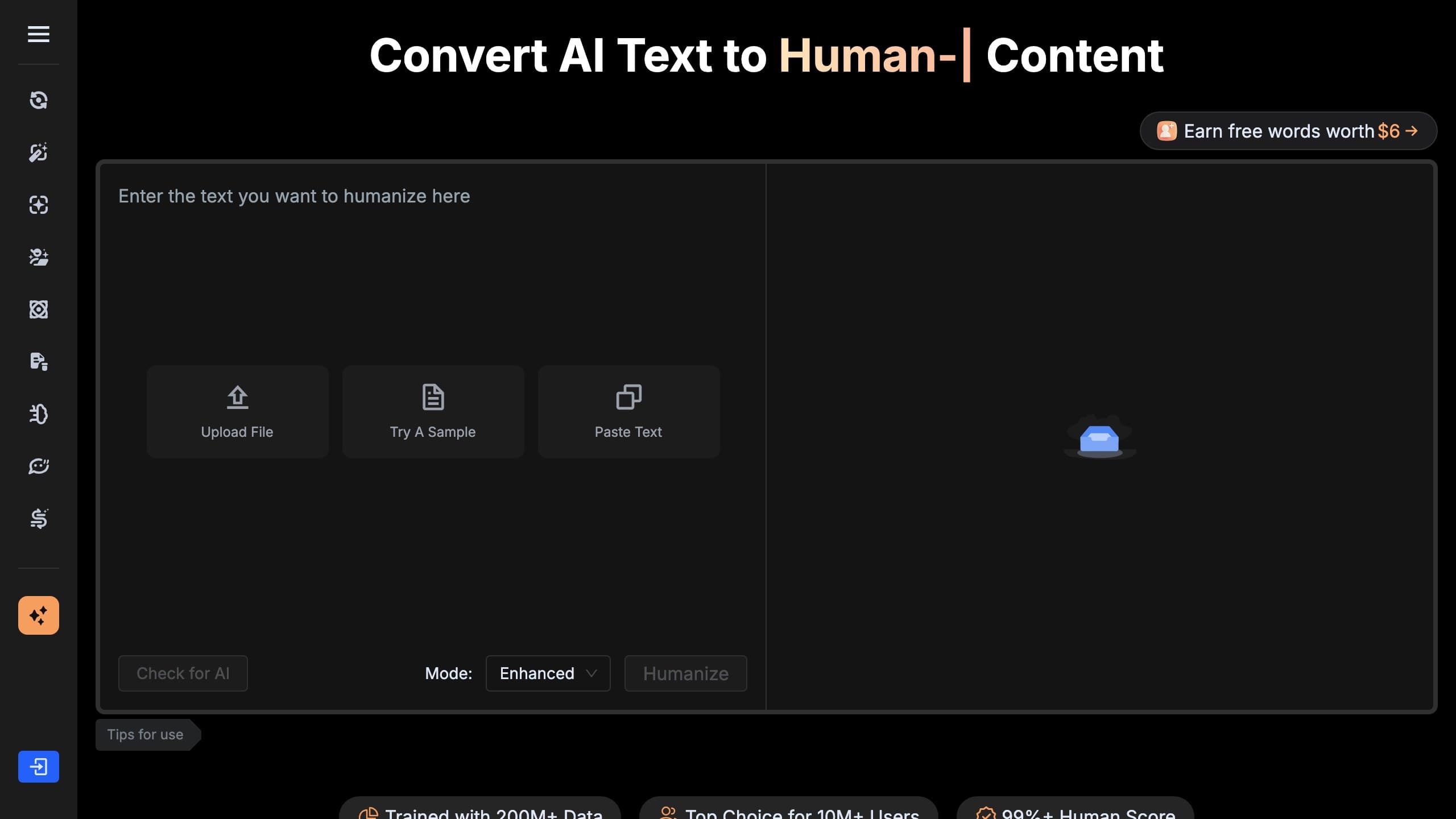
An illustrative rewrite
This shows the style BypassGPT's aggressive mode tends to produce. It illustrates register, not detection, it is not a pass/fail claim:
Pricing (verified June 2026)
I checked both tools against their live checkouts in June 2026. Annual and monthly toggles can change the headline numbers, so confirm at checkout before subscribing.
| Plan | WriteHybrid | BypassGPT |
|---|---|---|
| Free | 500 words/month, recurring, no card | 150 words, one-time (lifetime) |
| Entry paid | $9/mo, 10,000 words (Starter) | $14.99/mo, 15,000 words (Basic) |
| Higher tier | $19/mo, 50,000 words (Pro, + API) | $27.99/mo, 50,000 words (Pro) |
| Modes | Academic, Marketing, Casual, Technical | Normal, Aggressive (aggressive gated to Pro) |
| Refund window | 14 days | Short window, capped by word usage |
On the math: WriteHybrid Starter works out to about $0.0009 per word ($9 ÷ 10,000). BypassGPT Basic is about $0.0010 per word ($14.99 ÷ 15,000). At light volumes WriteHybrid is cheaper to start; at higher volumes BypassGPT's Pro tier closes the per-word gap. The starker difference is the free tier: WriteHybrid's 500 words every month adds up to roughly 6,000 words over a year you can use to test on your own drafts, while BypassGPT's 150-word lifetime trial is gone in a single paragraph.
One thing to read carefully before you pay BypassGPT: multiple reviewers report the refund "guarantee" is effectively void once you've run more than about 1,000 words, which is easy to exceed while you're still evaluating. More on that below.
How to use either tool for the best results
The workflow is similar for both, and following it makes a bigger difference to your outcome than the tool you pick:
- Start with a clean draft. Fix obvious factual or structural problems before humanizing, neither tool improves your argument, only its phrasing.
- Pick the register deliberately. On WriteHybrid, choose Academic for coursework or Marketing for web copy. On BypassGPT, decide whether aggressive mode's conversational tone suits the piece or undercuts it.
- Run it, then read it aloud. Both tools occasionally produce an awkward sentence; BypassGPT users specifically report stray characters, so proofread the output rather than pasting it blind.
- Protect your citations and key terms. Humanizers can mangle quoted material and technical vocabulary. Lock those down manually after the rewrite.
- Verify on the detector that actually matters to you. Run the final text through the checker your institution or client uses, Turnitin, GPTZero, Originality.ai, whatever it is, because that's the only result that counts.
What real users say about BypassGPT
I read through BypassGPT's public Trustpilot profile and Reddit threads to sanity-check my own impressions against a larger sample. At the time of writing, BypassGPT holds roughly a 3.2–3.5-star Trustpilot rating across 200+ reviews (the exact figure varies by regional Trustpilot domain), which Trustpilot labels "Average."
What satisfied users tend to praise:
- Genuinely useful for routine coursework, research summaries, and casual rewriting.
- Simple enough that first-time users get a result in seconds.
- Some reviewers report responsive help with subscription changes.
The recurring complaints are more striking, because the same issues show up from different people:
- Output artifacts: several reviewers describe stray random characters, capital letters mid-sentence, or out-of-context words that need manual cleanup.
- Refund friction: the money-back guarantee is widely described as hard to claim, limited to a short window and a low word-usage cap, with slow, template support replies.
- Post-update misses: after Turnitin's late-August 2025 detector update, multiple users reported BypassGPT output getting flagged where it previously passed.
None of this makes BypassGPT a scam, plenty of people use it happily for low-stakes content. But if you're a student with a graded submission, the refund terms and the "still flagged after the update" reports are worth taking seriously before you commit a year of billing.
The detector landscape changed in late 2025, and it matters here
This category is not static. Turnitin shipped a detector update in late August 2025 that specifically targeted humanizer output patterns, and tools across the board, BypassGPT included, per its own user reviews, saw less consistent results overnight. ChatGPTZero (GPTZero), Originality.ai, and Copyleaks all iterate on their own schedules too.
The practical takeaway is the same regardless of which tool you pick: a bypass rate you read in any review (including the ones quoting "98%") is a snapshot of one moment against one detector version. By the time you paste your own essay, the detector may have moved. That's the core reason WriteHybrid no longer publishes headline bypass percentages and instead points you to test your real draft, the only measurement that reflects today's detector on your actual text.
Detection: what we can and can't tell you
This is the honest part. BypassGPT markets itself on beating named detectors, but detection outcomes vary enormously by the exact text, its length, and which detector, and which version of it, runs the check. Neither I nor BypassGPT can promise a result for your specific draft, and I won't publish pass-rate percentages I can't stand behind.
What I can say from hands-on use: aggressive rewrites read naturally on casual and blog content, and dense academic passages with preserved terminology and citations are where any humanizer is most likely to leave detectable patterns. If your work goes through an institutional checker like Turnitin, the only number that matters is your own, humanize your real draft and run the output through the detector your audience actually uses before you submit anything graded.
When BypassGPT is the better pick
- You want the simplest possible paste-and-go editor with no mode decisions.
- You work mostly on casual or blog content where the conversational register is an asset.
- Your monthly volume is high enough that BypassGPT's Pro per-word cost beats paying more per word elsewhere.
When WriteHybrid is the better pick
- You want to evaluate before paying, the recurring free tier makes that realistic, and you're not gambling against a hard-to-claim refund.
- You need distinct registers (academic versus marketing) rather than one tone slider.
- You need API access, or you simply prefer a lower $9 entry point.
Neither tool should be chosen on a vendor's own detection marketing. Use the free options to run the same passage through both and check it on the detector you care about.
How to get the most natural output
Whichever tool you land on, a few habits consistently produce text that reads like a person wrote it:
- Treat the rewrite as a first pass, not a final answer. A short manual edit, varying sentence length, cutting a repeated transition, does more for naturalness than re-running the humanizer five times.
- Mix registers where it fits. A fully uniform tone is itself a tell; let some sentences run long and others stay short.
- Keep your real voice in the intro and conclusion. Those are the sections readers (and graders) scrutinize most.
- Run the output through more than one detector. GPTZero, Turnitin, and Originality.ai disagree constantly; passing one is not passing all.
- Never submit unread. The fastest way to get flagged is pasting machine output with stray characters or a citation the humanizer quietly broke.
Frequently asked questions
Related reading
Try WriteHybrid on your text
Paste AI-generated copy below. 500 humanized words free every month after signup.
Was this page helpful?
Your feedback helps us improve our testing write-ups.